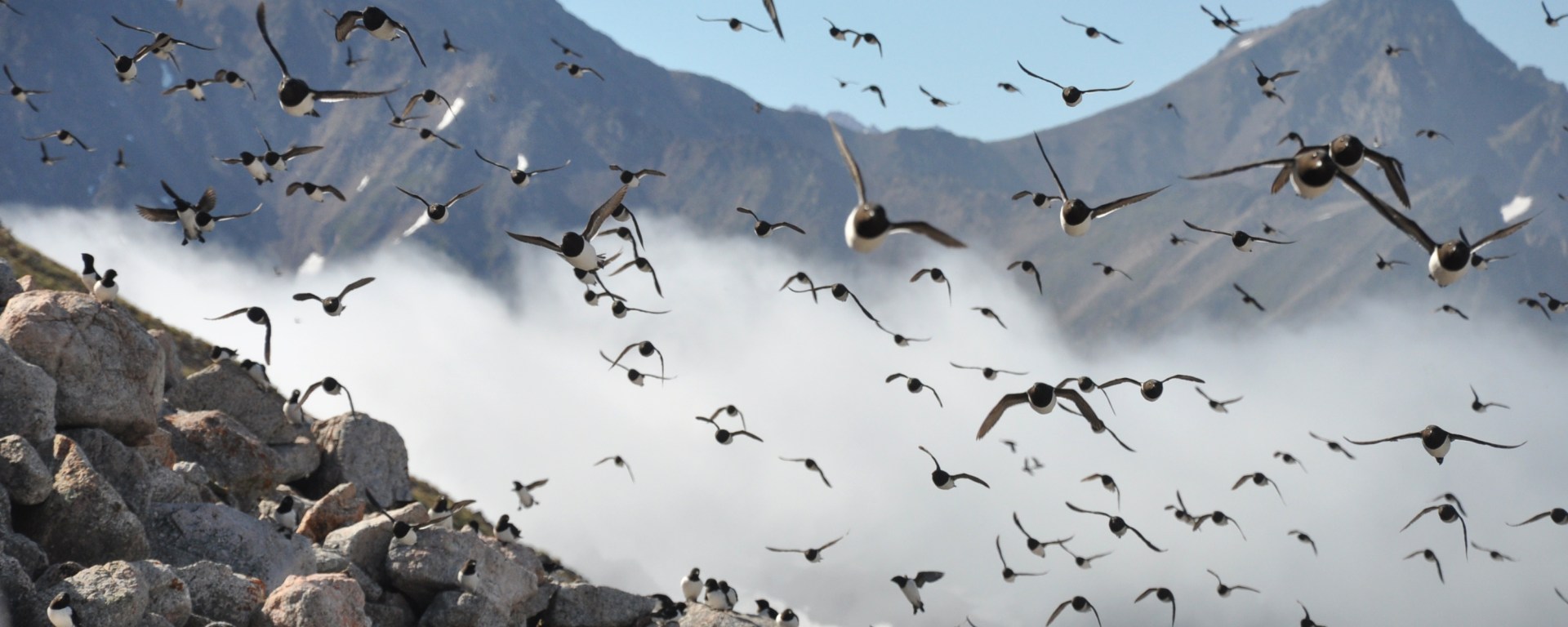
This blog post is provided by David Grémillet and tells the #StoryBehindThePaper for the article, “Critical constraints to ecological buffering in a rapidly changing Arctic: a long-term seabird study”, which was recently published in the Journal of Animal Ecology. The study builds upon 20 years of research on little auks in East Greenland, to identify limits to the adaptability of this seabird to global changes. Little auks are the most abundant Arctic seabirds and key ecosystem engineers. The authors demonstrate how they adjust to warming conditions but might not cope with increased severity of summer and winter storms, as well as mercury pollution.
I initially came to Greenland, nearly 30 years ago, to study the adaptation of diving seabirds to extreme cold, water depth and the polar night. Yet, I soon realized that warmth was more problematic than coldness for these polar athletes. From the late 1990s, Arctic climate change was becoming unquestionable, with rapidly retreating coastal glaciers, thawing permafrost and vanishing sea-ice. Yet, while evidence for high-latitude global changes was accumulating, there was (and there still is) a great deficit of studies evaluating the ecological consequences of these shifting environmental conditions.
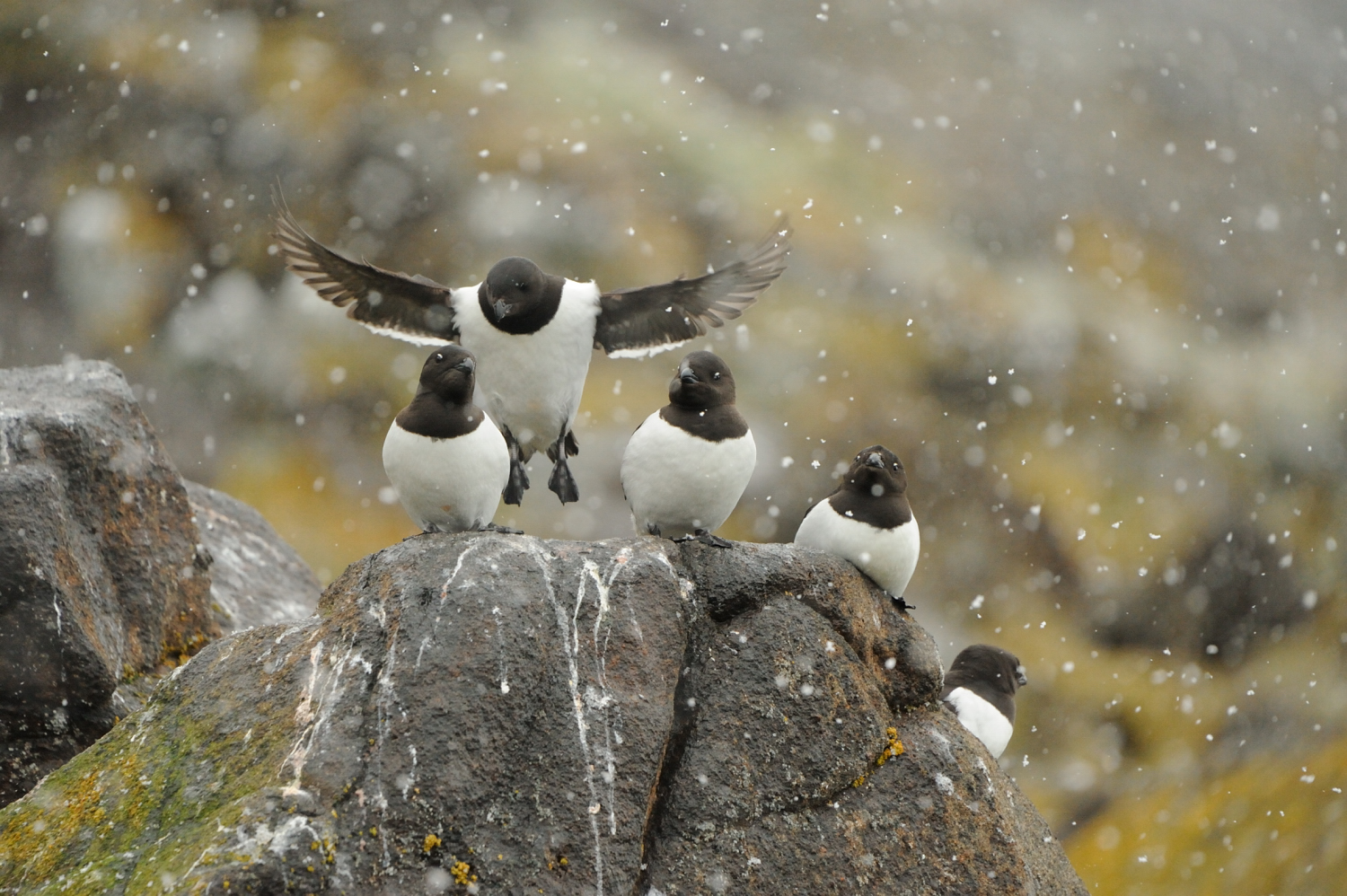
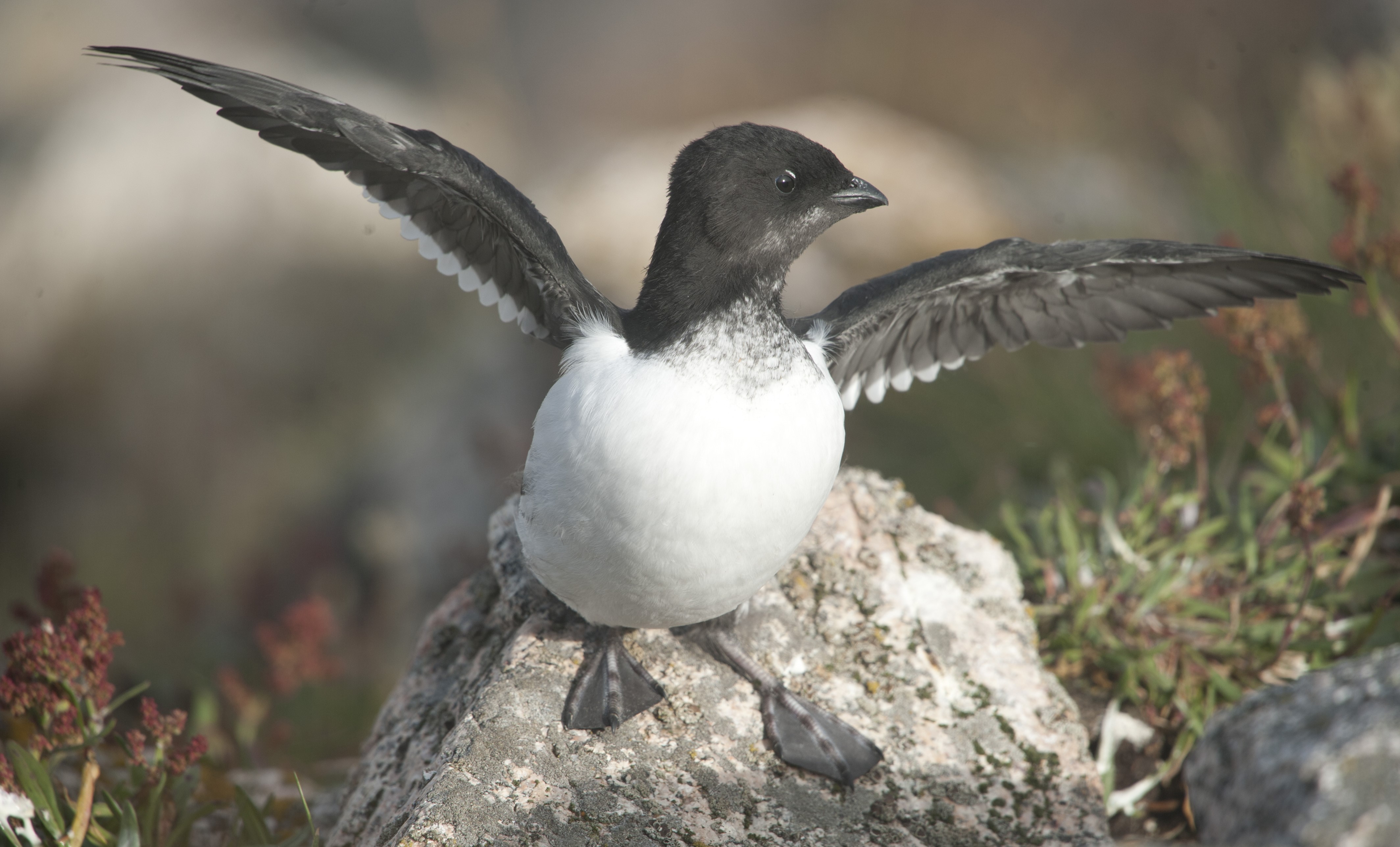
In the early 2000s, Ann Harding and I brainstormed the best possible ecological indicators of Arctic change. We focused on the coastal zone, since one third of the world’s coastline lays in the Arctic, and because nearly all Arctic peoples live by the sea and critically depend upon marine resources. We chose the little auk (Alle alle) as our target species, with a long list of criteria (detailed in the paper) which makes this 150g diving seabird the perfect ‘canary in the coalmine’ within Arctic aquatic ecosystems. Important ecological studies on little auks were being conducted by colleagues in Svalbard, but very little was known about the vast colonies of little auks breeding in Greenland. We nonetheless had one major problem: The little auk was generally considered an ‘impossible species to work with’, notably because it breeds in deep rock crevices, in steep, unstable boulder fields, within highly remote polar-bear areas. Hence, many little auk afficionados had never seen a chick, and we were facing immense logistical and financial challenges associated with ultra-remote Arctic fieldwork.
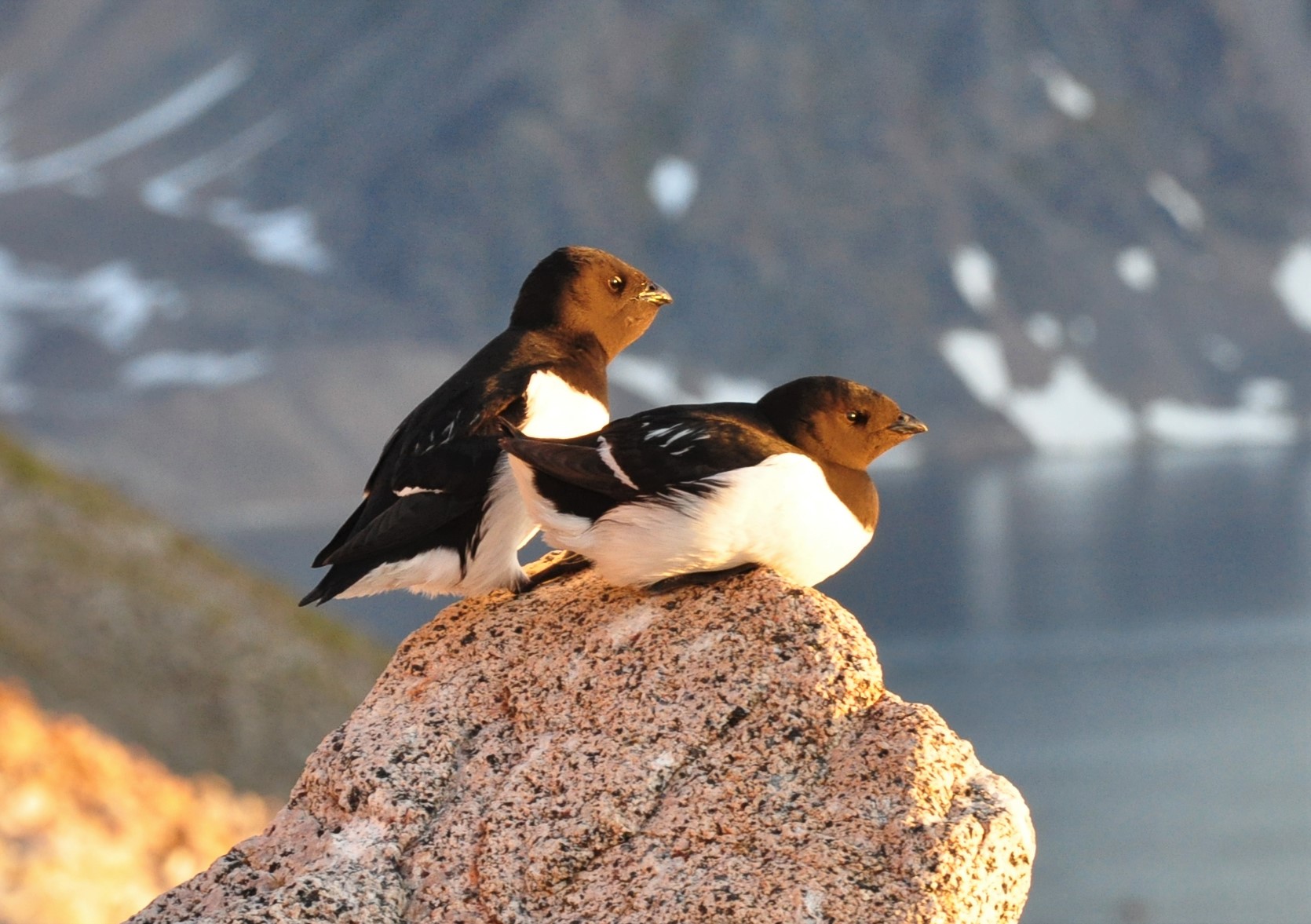
Untroubled by these hurdles, Ann Harding managed to identify a suitable study area along the East coast of Greenland, with nests sufficiently shallow to be accessed, and not too many polar bears. She had previously been monitoring Alaskan seabirds for a decade, and provided detailed field protocols to assess e.g. little auk diet, chick growth and adult inter-annual survival. We are still using these protocols to this day.
In 2005, Ann and I secured funding from the French Polar Institute IPEV, which has been ever-since supporting our annual East Greenland fieldwork. Numerous additional funds were subsequently provided by NSF, the EU, French ANR and CNRS.
We initially hypothesized that little auks would not cope with Arctic warming; They seemed tightly linked to cold water and dense pack-ice as foraging environments, where they efficiently preyed on large, fatty copepods. Yet, the first decade of our program demonstrated astonishing adaptability: In the absence of sea-ice and in warmer waters, little auks worked harder and still made ends meet by feeding in open water on smaller and leaner prey. This performance left us in awe, as birds seemed to reproduce and survive regardless of environmental conditions.
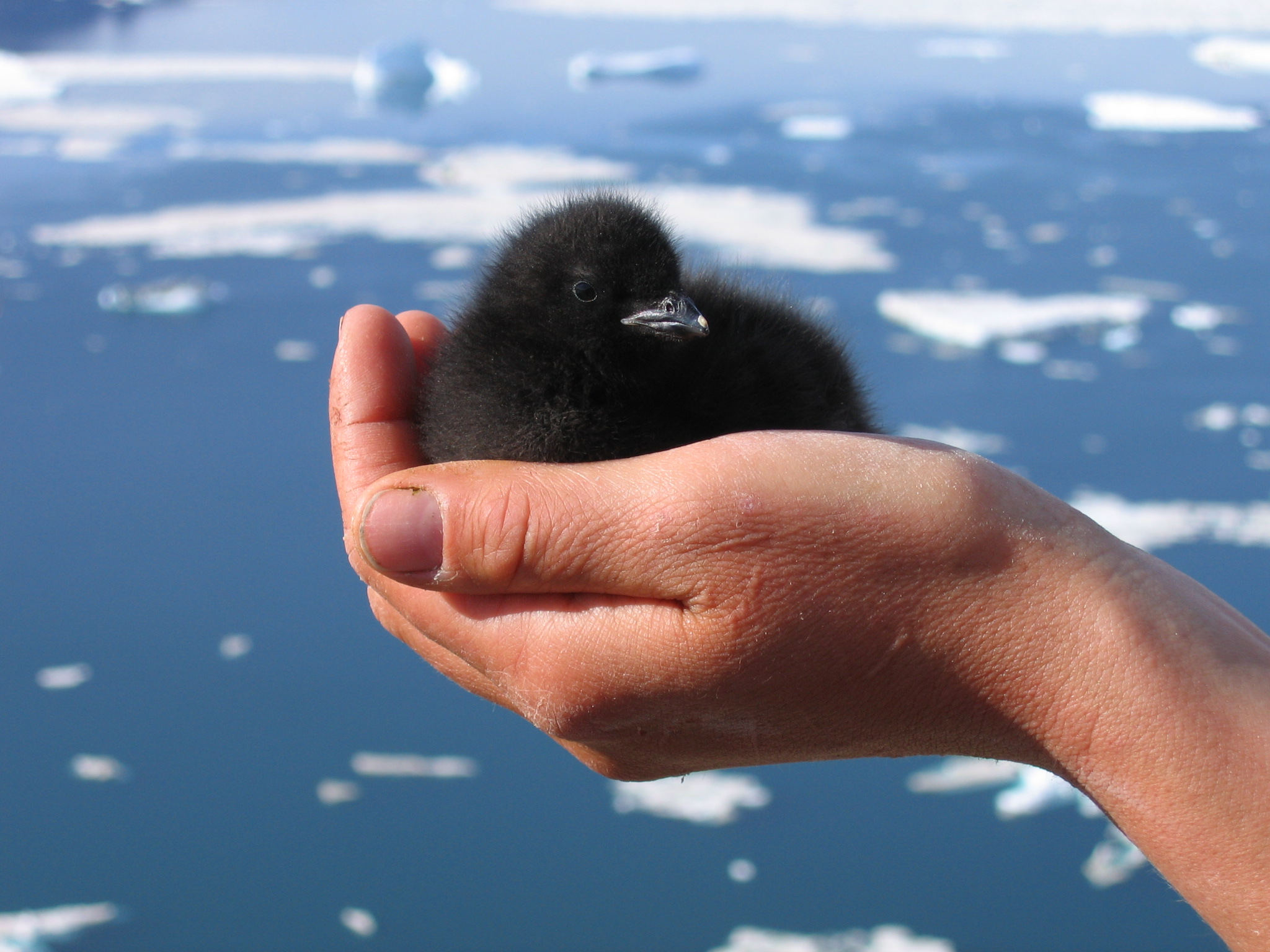
The second decade of monitoring proved otherwise. Two further principal investigators emerged soon after the start of the project, bringing additional expertise; Jérôme Fort explored little auk migration and ecotoxicology, while Françoise Amélineau dug deeper into little auk foraging ecology, plastic pollution and big-data analyses. This core team has led twenty-three field seasons in East Greenland, with >35 people participating in the Greenlandic fieldwork over the years. We also built a fruitful collaboration with the community of Ittoqqortoormiit (East Greenland), who provided logistics support and local insights on Arctic wildlife in the context of climate change.
Our joint work demonstrated that although little auks managed to maintain fitness indexes in most years, specific constraints did challenge them critically. Notably, Arctic warming increases little auks’ exposure to mercury, and this pollutant affected birds: Those with higher mercury load lose oxygen-binding capabilities and have to rest longer in-between dives. Such handicap is serious, considering that little auks must already search harder for less profitable prey in a warmer ocean. Also, we found that winter storms killed little auks by preventing them from feeding, through a ‘washing-machine effect’ within surface waters. Summer storms also affected them, reducing their capacity to provision chicks and hence diminishing chick-growth. As storms are becoming more frequent and intense in a warming Arctic, this second constraint severely reduces little auk fitness.
Our study demonstrates the irreplaceable power of long-term ecological programs, through their capacity to detect processes which remain unsuspected at the scale of shorter-term investigations. The East Greenland little auk program notably led to 8 PhDs and 8 post docs, and we hope that it will continue to inspire young investigators for decades to come.
Read the paper
Read the full paper here: https://doi.org/10.1111/1365-2656.70358

