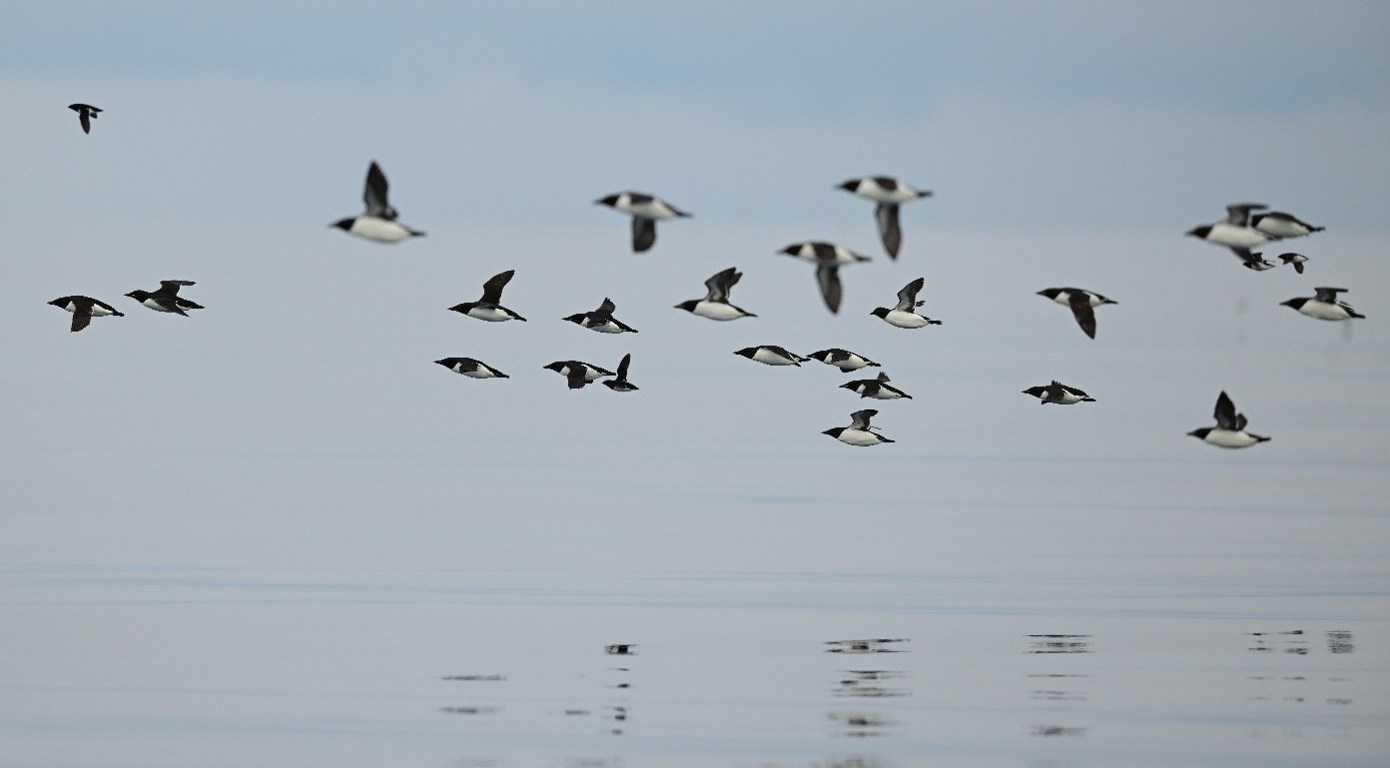
This blog post is provided by Caitlin Frankish and tells the #StoryBehindThePaper for the article, “From stable high costs to variable low costs: a continuum of non-breeding energy expenditure strategies in North Atlantic seabirds”, which was recently published in Journal of Animal Ecology. In their study, Frankish and colleagues explore the energetic trade-offs and diversity of movement patterns in North Atlantic seabirds.
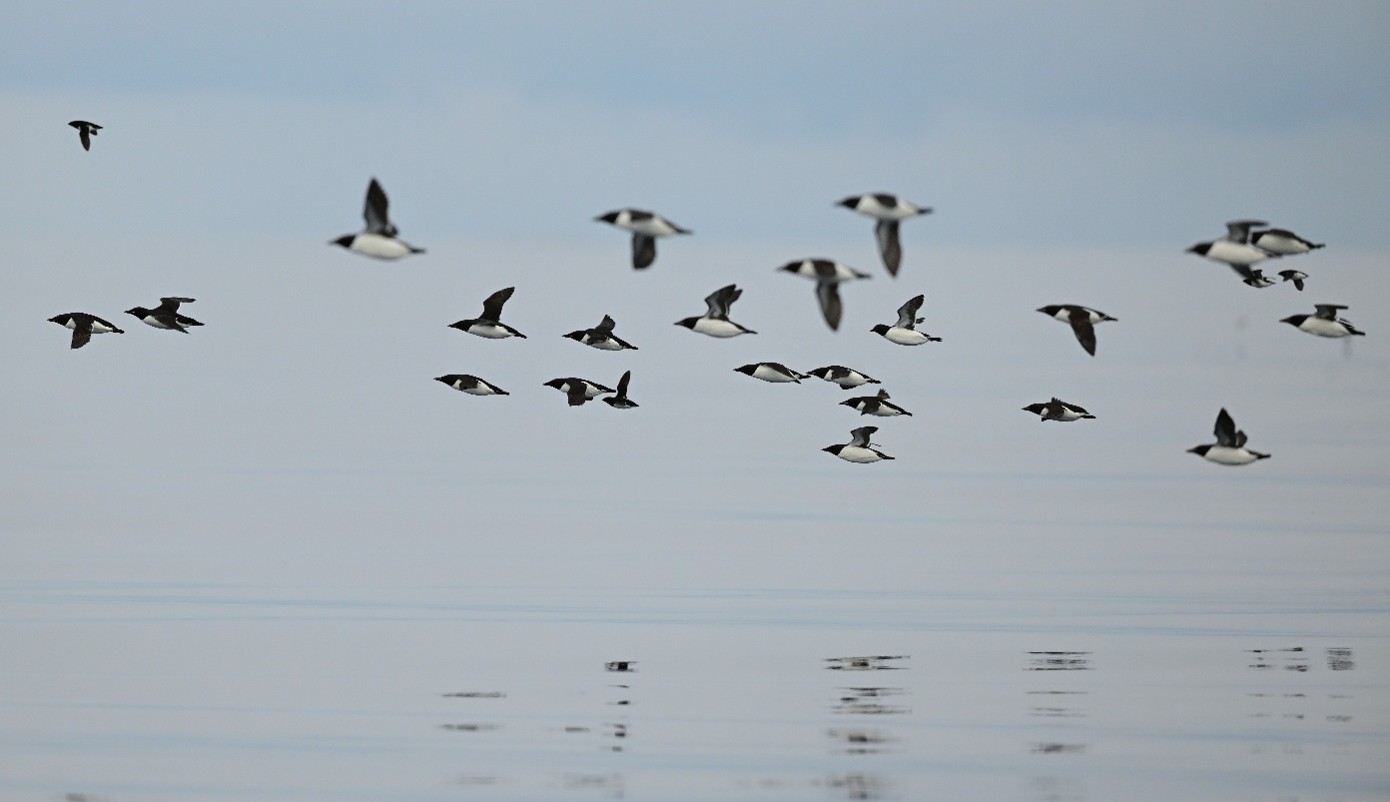
We often associate seabirds with the colonies where they breed, yet they spend much of the year at sea, where they are far more difficult to observe. Once breeding is over, many birds leave land behind and travel thousands of kilometres in search of more favourable conditions. Tracking technology and large-scale tracking programs such as SEATRACK have transformed our understanding of this less visible part of their annual cycle, revealing a remarkable diversity of movement patterns, both within and among species.
What is much less clear is what drives this variation. Why do some birds stay close to their breeding colonies while others travel thousands of kilometres, or remain in cold waters rather than move somewhere warmer? In this study, we explored one part of this puzzle by looking at the energetic costs associated with different non-breeding movement strategies and the trade-offs faced throughout the annual cycle.
What does life at sea cost?
Life at sea comes with a range of energetic costs. Birds need energy to fly, find food and keep warm in often cold and challenging conditions. How much energy they expend depends partly on how they allocate their time between these different activities, but also on where they go. Travelling between areas comes at a cost, while where birds spend their time determines the environmental conditions they experience. Understanding what seabirds do and where they go during the non-breeding season can thus help us estimate what it costs them to live at sea.
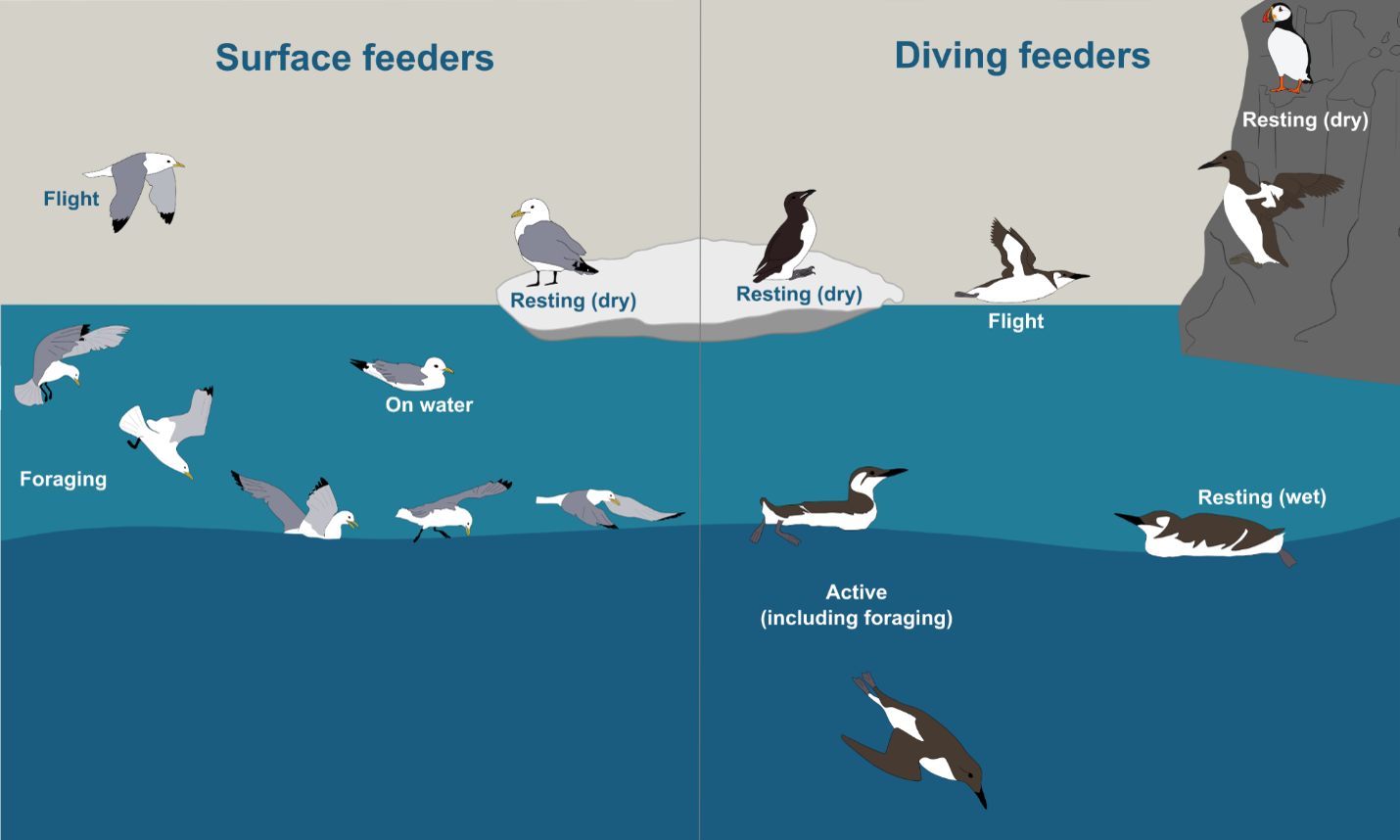
For some seabirds, there are particularly interesting trade-offs involved. Auks, such as puffins, guillemots and little auks, use their wings both to fly and to propel themselves underwater. This makes them excellent divers, but relatively inefficient flyers. At the same time, spending large amounts of time in cold water comes with substantial thermoregulatory costs. Moving to a different wintering area could therefore reduce some costs while increasing others. Travelling farther may require more energy, for example, but could allow a bird to spend part of the winter in warmer waters where the costs of keeping warm are lower.
We wanted to know how these different costs add up over the non-breeding season, but also how they vary through time. To investigate this, we brought together tracking data from almost 4,000 birds from 108 populations across the North Atlantic. The dataset covered four diving auk species – Atlantic puffins, common and Brünnich’s guillemots, and little auks – as well as two more efficient flying, surface-feeding species: black-legged kittiwakes and northern fulmars.
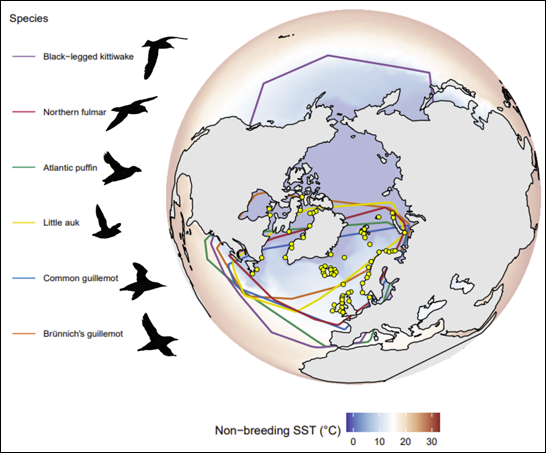
Using data from geolocation-immersion loggers deployed through the SEATRACK tracking programme, we estimated how birds divided their time between activities such as flying, foraging and resting on the water, and the environmental conditions they experienced. Combining this information with the energetic costs of these different activities allowed us to estimate energy expenditure throughout the non-breeding season.
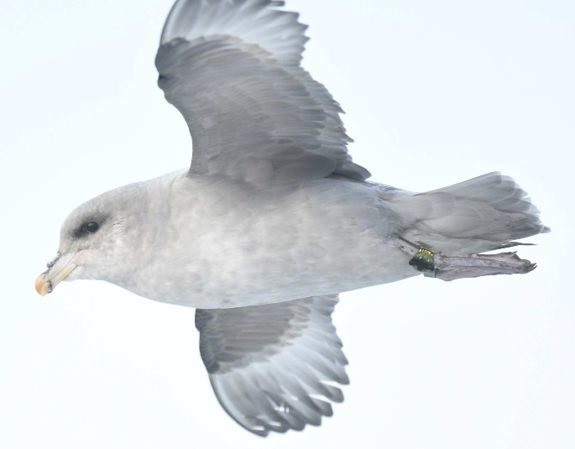
Different ways of getting through the winter
What emerged were many different ways of getting through the non-breeding season, with striking variation both in how much energy birds expended overall and how those costs were distributed through time.
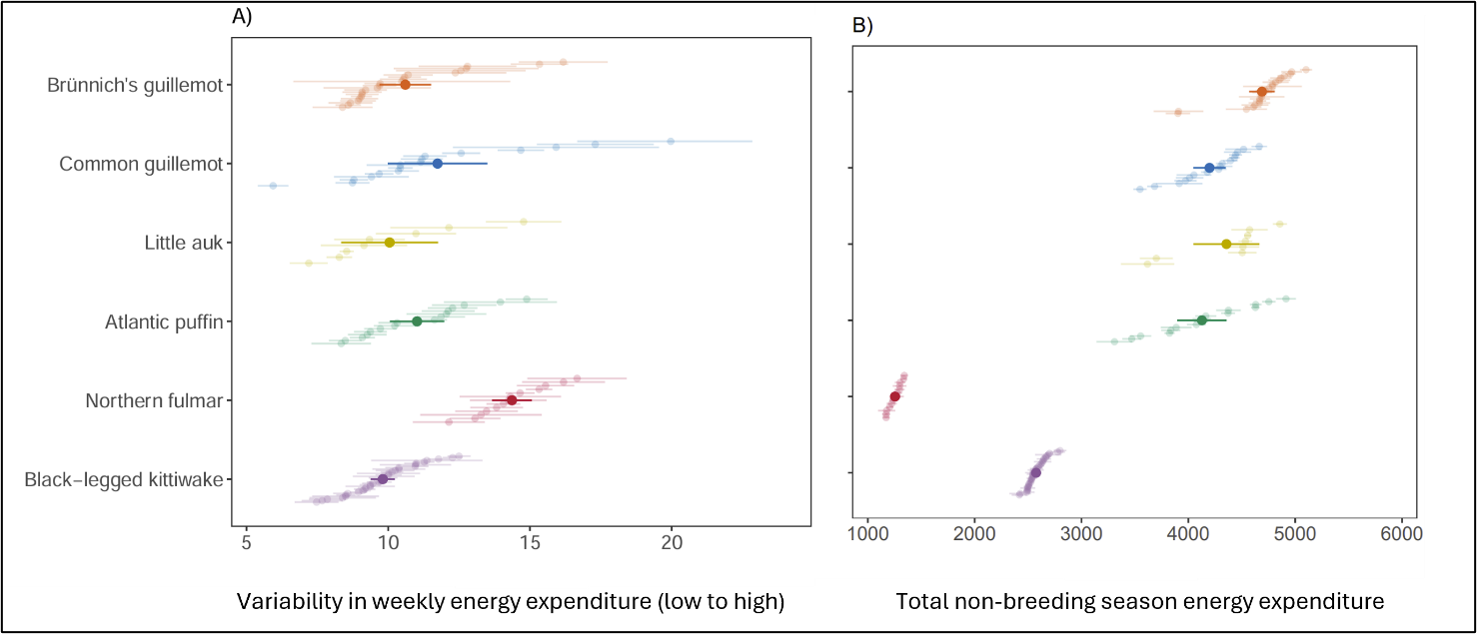
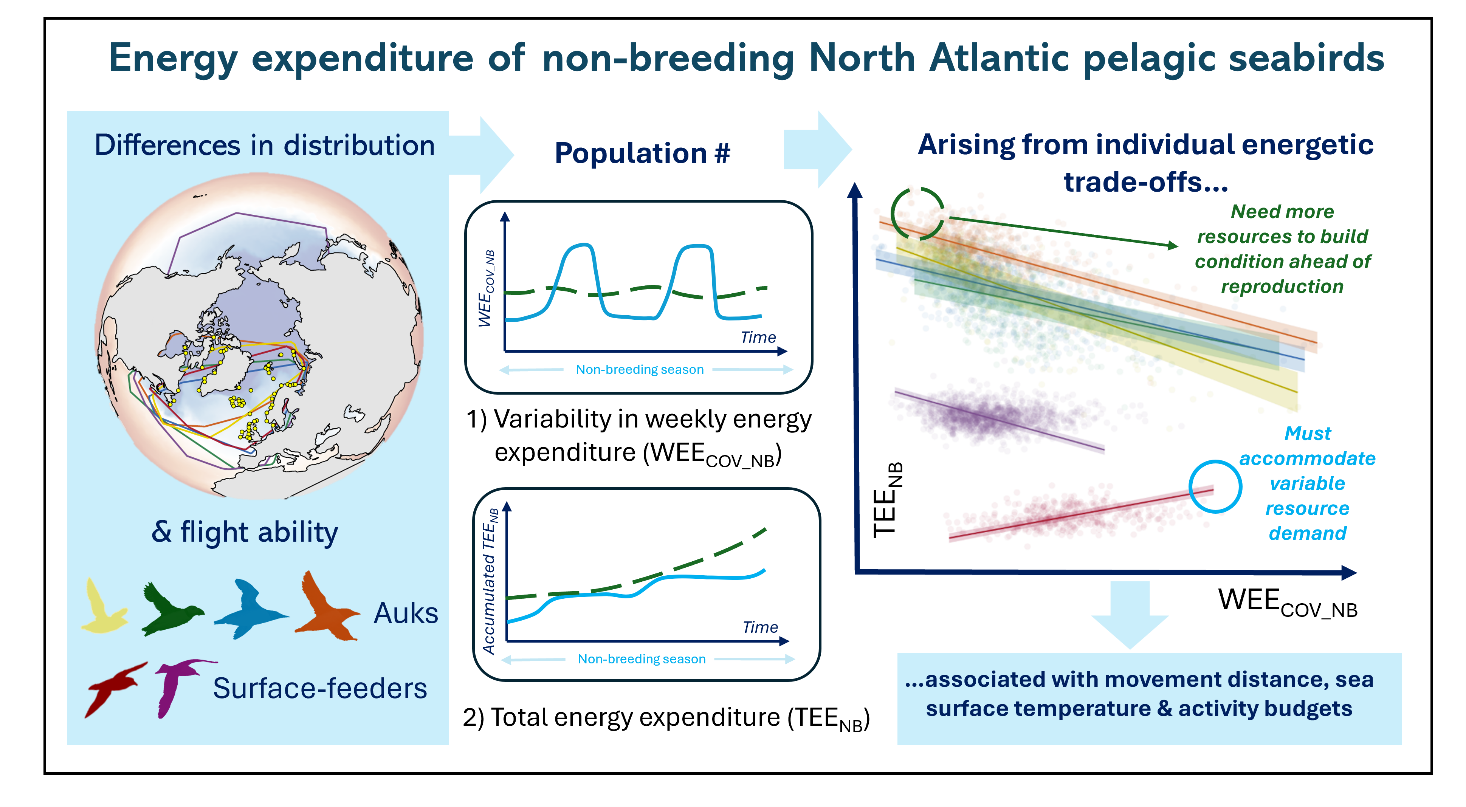
In addition, these two dimensions of energy expenditure (i.e. how much and how variable) were not independent. In five of the six species, we found a continuum: at one end were birds with relatively high overall expenditure that remained fairly stable from week to week. At the other were birds that spent less energy overall but experienced much larger fluctuations in their weekly costs.
This pattern was particularly clear in the auks, where the thermal environment played an important role. Birds from colder breeding areas, or those that remained in similarly cold conditions during the non-breeding season, tended to have higher but more stable energy expenditure. Birds moving into warmer conditions tended to have lower overall costs, but greater variation in expenditure through the non-breeding season.
Travelling farther did not necessarily mean having a more energetically expensive winter: migration distance was not related to total non-breeding energy expenditure. However, it did help explain how variable expenditure was through the season in little auks and Brünnich’s guillemots. How far birds travelled was therefore only one part of the picture; the conditions they encountered also mattered.
It’s not just how much, but when
Why should it matter whether energy expenditure is stable or variable? The energy birds spend ultimately has to be replaced, but opportunities to do that through feeding also vary through time. For birds with more variable expenditure, periods of higher-than-usual energetic demand may be relatively easy to accommodate when prey is abundant and accessible, but potentially more challenging if they coincide with poorer feeding conditions or severe weather. Birds with consistently high expenditure may face a different challenge: maintaining relatively high energy intake over much of the non-breeding season.
Neither end of the continuum is therefore necessarily ‘better’. Birds with lower but more variable expenditure experience greater shifts in energetic demand through the season, whereas birds with higher and more stable expenditure sustain relatively high costs for longer. Looking only at total expenditure over the whole non-breeding season could therefore obscure these differences in the timing and consistency of energetic demand.
Different strategies in a changing ocean
These differences may become increasingly relevant as marine environments change. Warming seas could reduce some costs, particularly the energy birds need to spend keeping warm when on or under the water, but temperature changes can also alter marine food webs and the availability of prey.
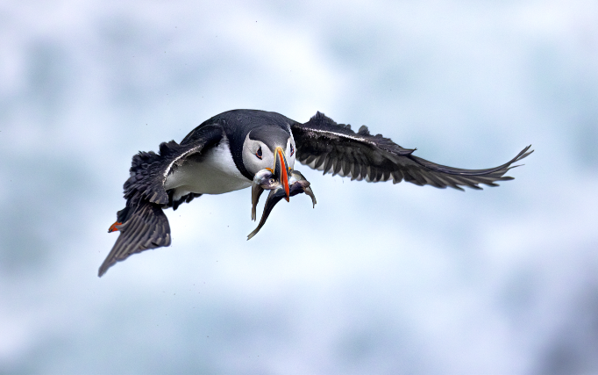
We are beginning to understand what different parts of the ocean cost a seabird energetically but know much less about where and when birds can acquire energy through feeding. Put simply, we are still missing an equivalent map of where the food is. Bringing these two sides of the energy budget together – where energy is spent and where it can be gained – will be an important next step in understanding the role of seabirds in the ocean and when and where they may be most vulnerable.
Finally, this study highlights the value of large-scale collaboration. Researchers collected these data in a coordinated and standardized manner over many years at colonies across the North Atlantic. Bringing these datasets together allowed us to compare populations experiencing very different environments and identify broader patterns that no single colony could reveal.
Read the paper
Read the full paper here: https://doi.org/10.1111/1365-2656.70379

