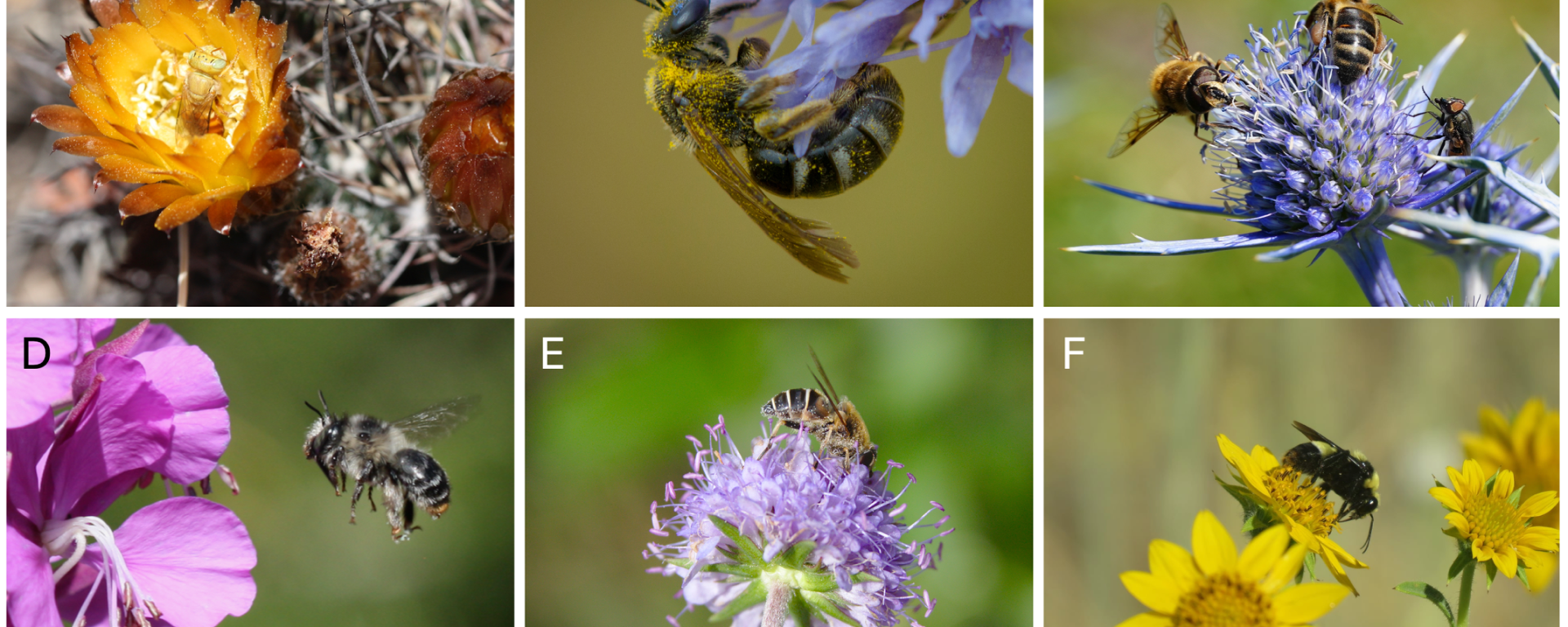
This blog post is provided by Julian Resasco and tells the #StoryBehindThePaper for the article “Responses of multi-year plant–pollinator networks to temperature and drought variation across continents”, which was recently published in Journal of Animal Ecology. In their study, Resasco and colleagues conduct a synthesis across 200,000 recorded plant-pollinator interactions to explore how ecosystems respond to long-term climatic changes.
Those of us who conduct long-term ecological research or are simply keen observers of the natural world around us, likely have noticed how changing climatic conditions affect the communities we study. Some years (increasingly) are unusually warm, others are dry or wet, and the plants and animals we encounter can be quite different from one year to the next. Some of this year-to-year variation reflects the effects of climate change and understanding how communities respond to climatic variation can help us anticipate how they might change as the climate continues to change. Plant–pollinator interactions are important to ecological communities, providing food resources for pollinators, enabling the reproduction of flowering plants, and supporting biodiversity and ecosystem functioning.
How it started
For more than a decade, members of my lab and I have visited a subalpine meadow, “Elk Meadow”, at the University of Colorado’s Mountain Research Station in the southern Rocky Mountains (USA) throughout the flowering season to record data on flowers, pollinators, and the interactions between. Over this period, we’ve seen a lot of variation in abiotic conditions like temperature, snowpack, and summer precipitation. Along with Lena Zoller, a former postdoc in my lab, we wondered whether these climatic differences could explain some of the changes we were seeing in the meadow. Sure enough, we found that climatic variation was associated with changes in these communities. Drought conditions, which are becoming more common, influenced the abundance and diversity of flowering plants and the composition of plant and pollinator communities. Interestingly, however, we found little evidence that temperature or drought affected the overall structure of the networks of interactions between plants and pollinators. This work is forthcoming in Oikos.
But this raised another question: Were these patterns particular to our meadow in Colorado, or might they hold across other ecosystems?
From a Colorado meadow to a global synthesis
Synthesis is an important part of ecology. Individual case studies can tell us a lot about particular places, but bringing together data from different systems allows us to look for broader patterns and better understand how general our findings might be and why they might vary.
Last year, I spent a sabbatical at the Basque Centre for Climate Change (BC3) near Bilbao, Spain, hosted by Ainhoa Magrach. My sabbatical offered a great opportunity to step back from the day-to-day of ongoing research projects and think about broader questions that could be addressed by bringing together data from different studies. A call for papers for the British Ecological Society’s Networks Ecology in the Anthropocene special feature provided just the motivation (and a much needed deadline!) we needed to turn the idea into a paper.
Ainhoa’s research group had also been collecting multi-year data on plant–pollinator interactions, in their case from Gorbeia Natural Park in the Basque Country. During my stay, much of Europe was experiencing intense heatwaves, as it has again this year, which made questions about how ecological communities respond to climatic extremes feel particularly relevant. I also reached out to Diego Vázquez and Natacha Chacoff, colleagues with whom I had collaborated previously, who had a multi-year plant-pollinator dataset from Villavicencio Nature Reserve in Mendoza Argentina. With datasets from Elk Meadow in Colorado, Gorbeia in the Basque Country, and Villavicencio in Argentina, I began tinkering with ways to combine the data for a broader synthesis. Together with these collaborators and other colleagues at BC3, we started reaching out to researchers around the world who had collected similar multi-year data on plant–pollinator interactions. We put together a short questionnaire using Google Forms and drew on our networks from previous working groups and collaborations to reach out to colleagues who might have suitable datasets. We also encouraged them to pass the request along to others who might be interested in contributing.
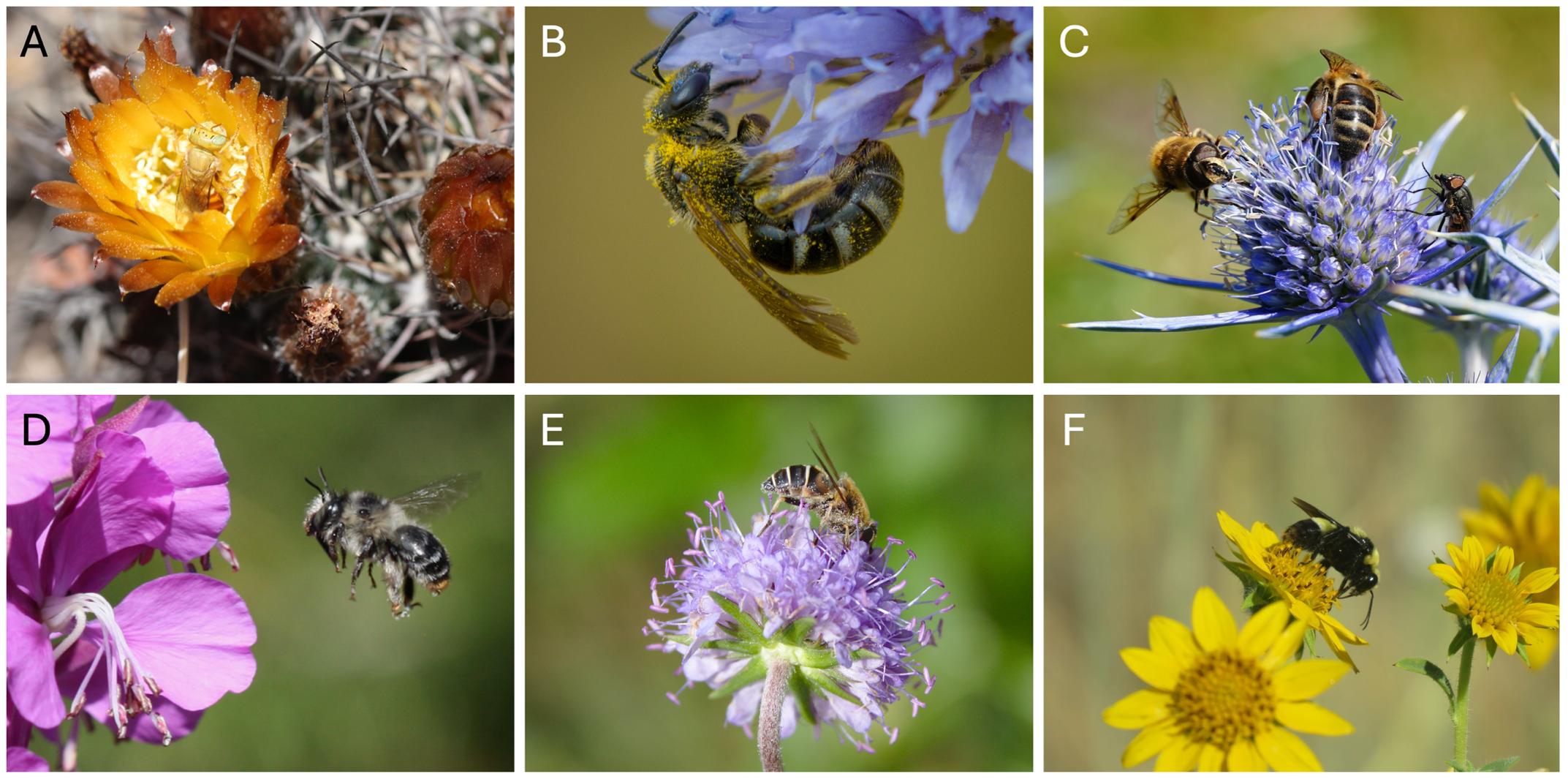
Collecting multi-year data on plant–pollinator interactions is no small undertaking. It requires repeated visits to field sites, over many years, to record which plants are flowering, which pollinators are visiting them, and who is interacting with whom. Identifying species, especially insects, requires considerable expertise and patience, often involving careful examination of minute differences in physical characteristics to distinguish one species from another. Maintaining these efforts year after year takes commitment, often from many different people.
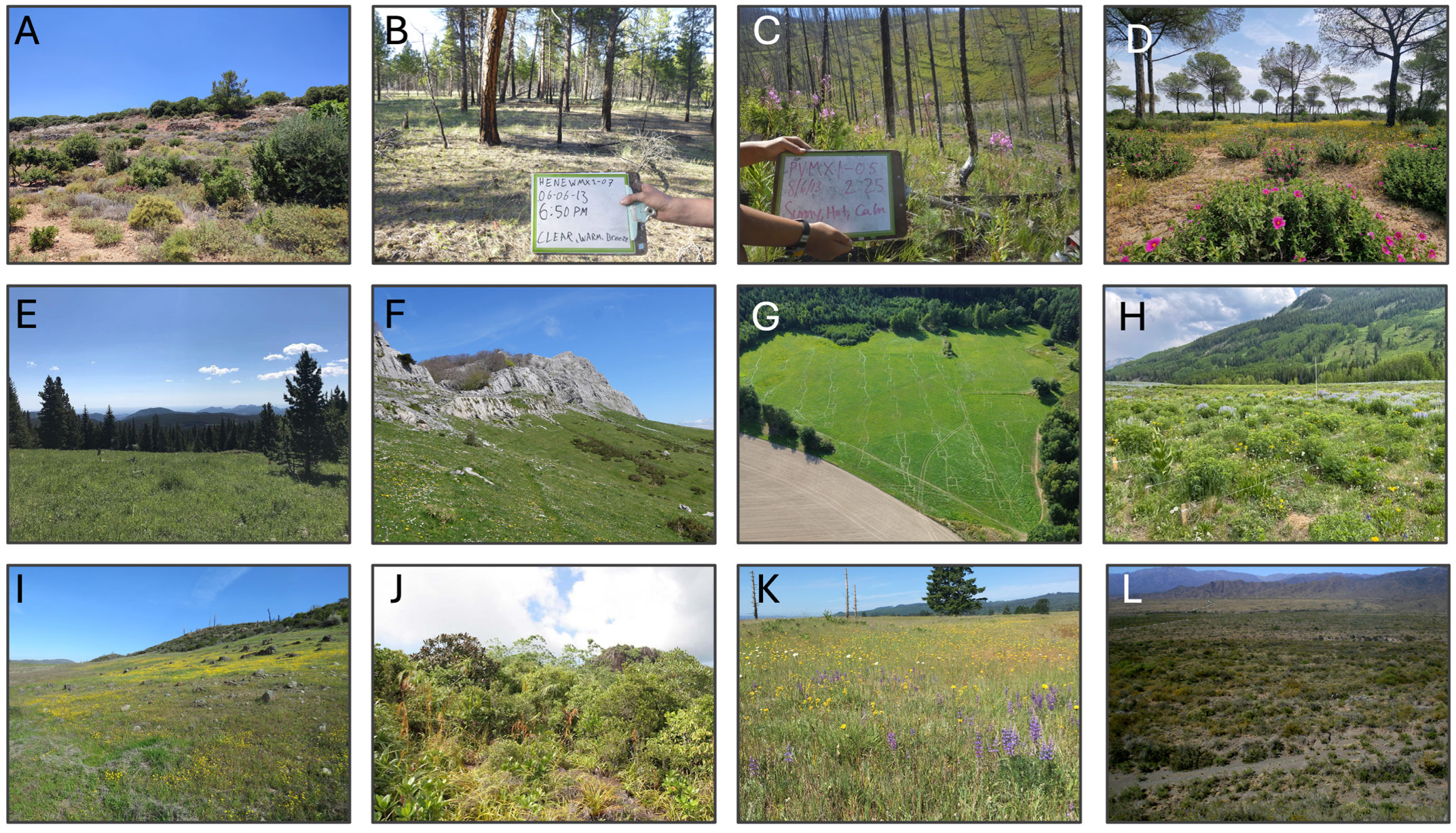
Still, researchers around the world have been doing just that. Through our outreach, we assembled datasets from 12 sites across several continents, representing 71 annual networks and more than 200,000 recorded interactions between plants and pollinators. Our many co-authors contributed years of data collection and invaluable knowledge of their study systems and organisms, making this global synthesis possible. This gave us an opportunity to ask whether unusually warm, cool, dry, or wet years were associated with consistent changes in plant–pollinator communities and their interactions.
What did we find?
We found that climate was associated with several aspects of plant–pollinator communities, but the responses were not always straightforward.
Pollinator richness was highest under intermediate moisture conditions, declining in both unusually dry and unusually wet years. Flowering plant richness tended to decrease in warmer years, while pollinator evenness also declined with increasing temperature, indicating that some pollinator species became more dominant relative to others. Flowering plant evenness, on the other hand, increased in wetter years.
We also found considerable turnover in the identities of plants and pollinators from year to year, with pollinator communities changing more than flowering plant communities. However, the relationships between these changes and climatic conditions differed among sites.
Several properties of plant–pollinator interaction networks were relatively stable despite these changes in the communities themselves. Measures describing how well connected, nested or specialised the overall networks were showed little evidence of responding to climatic variation.
Other aspects of the interactions did change. In wetter years, interactions tended to be distributed more evenly across different plant–pollinator pairs, whereas warmer conditions were associated with a greater concentration of interactions among fewer pairs. Individual species also tended to be less specialised in warmer and wetter years.
What does this mean?
Our findings suggest that climatic variation can influence which species are present, their abundances, and how they interact, without necessarily producing large changes in the overall structure of ecological networks.
An important consideration is that we examined climatic variation at an annual scale, which may be too coarse to capture some biologically important events. For example, a heatwave or drought during peak flowering could have strong effects on plants, pollinators, and their interactions, but these effects may be difficult to detect when climate and interaction data are summarised across an entire season or year. Similarly, the cumulative effects of several unusually warm or dry years may not be apparent when examining individual years separately. Longer-term datasets may also be needed to detect patterns that are difficult to distinguish from the considerable year-to-year variation in plant–pollinator communities.
I can be difficult to generalise ecological responses to climate. Even when we ask the same questions using similar data from different ecosystems, the answers can vary considerably. We explored some possible reasons for these differences and found hints that responses to climatic variation may depend on the seasonality of the climate. We also found some indications that warmer, Mediterranean-type ecosystems may respond more negatively to unusually warm years. The length of time over which data were collected may also matter, with longer, continuous datasets making it easier to detect relationships with climate. These patterns are preliminary, but they offer some promising directions for future research.
For me, this project also reinforced the value of long-term ecological research and collaboration. The synthesis was possible only because researchers at many different sites had invested years of effort in collecting and maintaining these datasets. Bringing those efforts together allowed us to ask questions that none of the individual studies could address on their own.
And it leaves us with plenty of new questions about how responses of plant–pollinator communities to climatic variation depend on the timescales we examine and the ecological context of different systems.
Read the paper
Read the full paper here: https://doi.org/10.1111/1365-2656.70398

