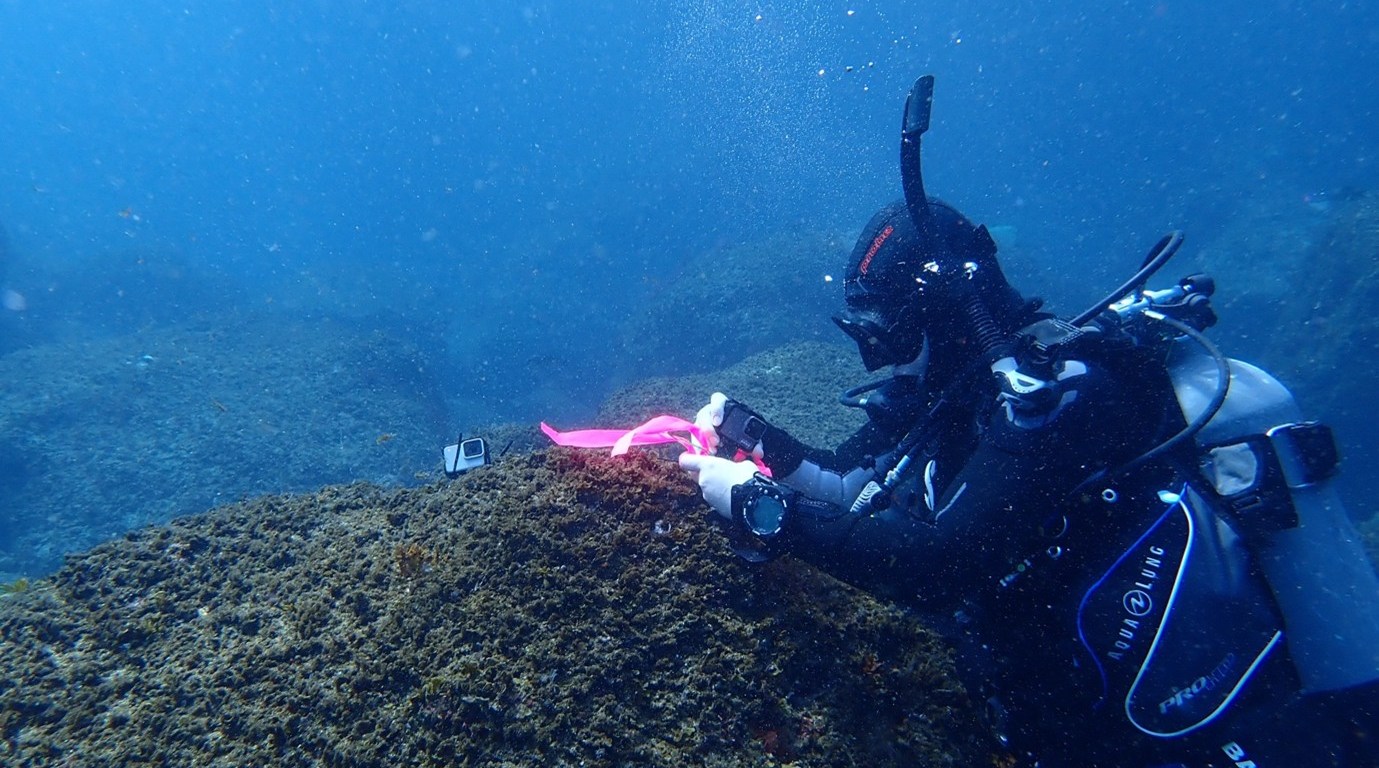
This blog post is provided by Angus Mitchell and colleagues and tells the #StoryBehindThePaper for the article, “Ocean acidification, more than warming or heatwaves, constrains shoaling behaviour in a range-extending fish through habitat simplification”, which was recently published in the Journal of Animal Ecology. In their study, Mitchell and colleagues reveal the hidden impact that climate change can have on the social lives and shoaling behaviour of reef fish.
Watch a reef long enough and you realise that fish are almost never alone. They move in groups, feed in groups, and react to danger as a group. For small reef fish, being part of a shoal is a survival strategy. More eyes spot predators sooner. More bodies mean any one fish is less likely to be the unlucky one. And fish in bigger groups tend to be bolder, as they forage more efficiently, stay out in the open more, and spend less time hiding.
When we started looking at how climate change affects fish behaviour on reefs experiencing ocean acidification and warming in Japan, we assumed we would find the usual story. Warmer water and rising acidity would alter fish behaviour, make them more cautious, or accelerate their activity levels. That seemed like the obvious prediction.
It turned out to be different — or at least, for schooling species.
Reefs as time machines
The reefs we work at in Japan are unusual. Volcanic CO2 seeps on the seafloor have created climatic conditions analogous to projected future oceans: some reefs sit under present-day seawater chemistry, others are warmer, and some experience both elevated temperature and acidity together. These natural climate analogues allowed us to ask real ecological questions in a natural setting.
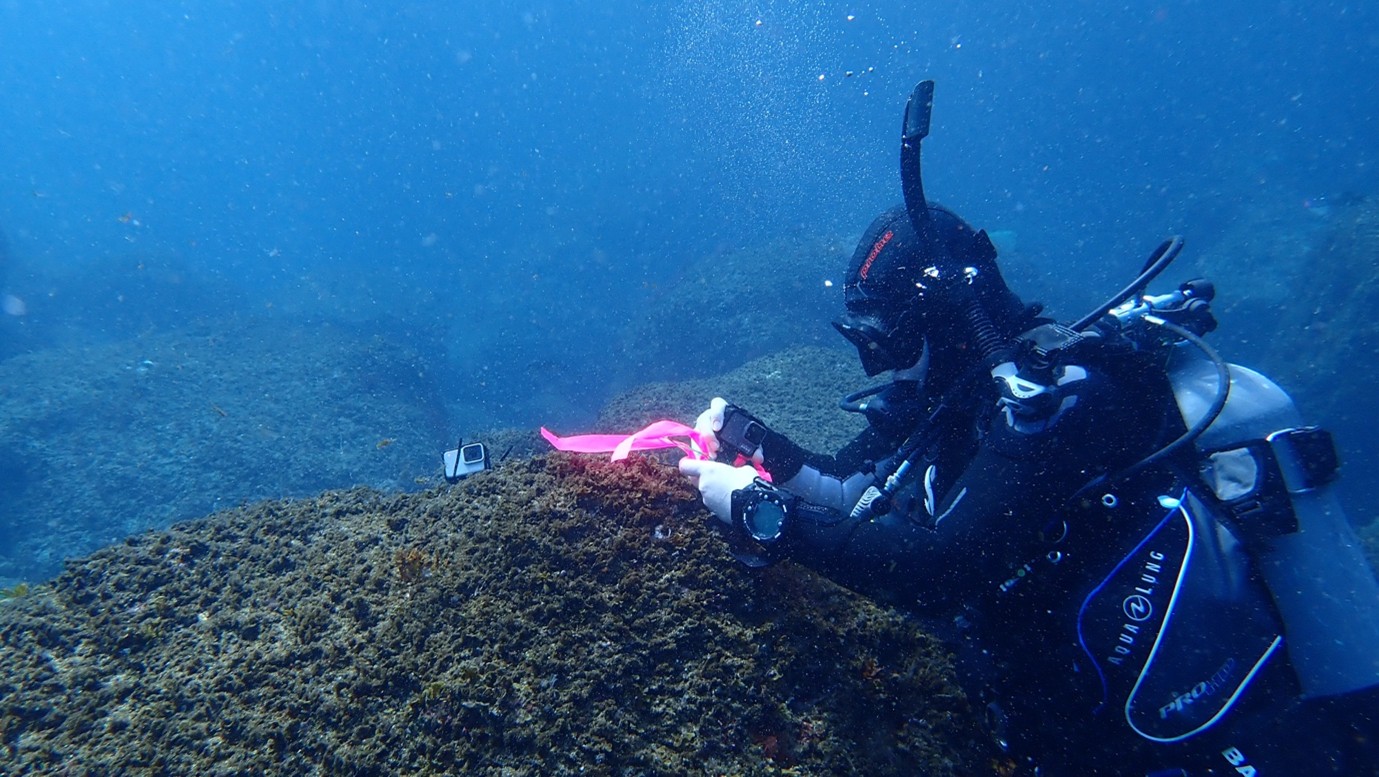
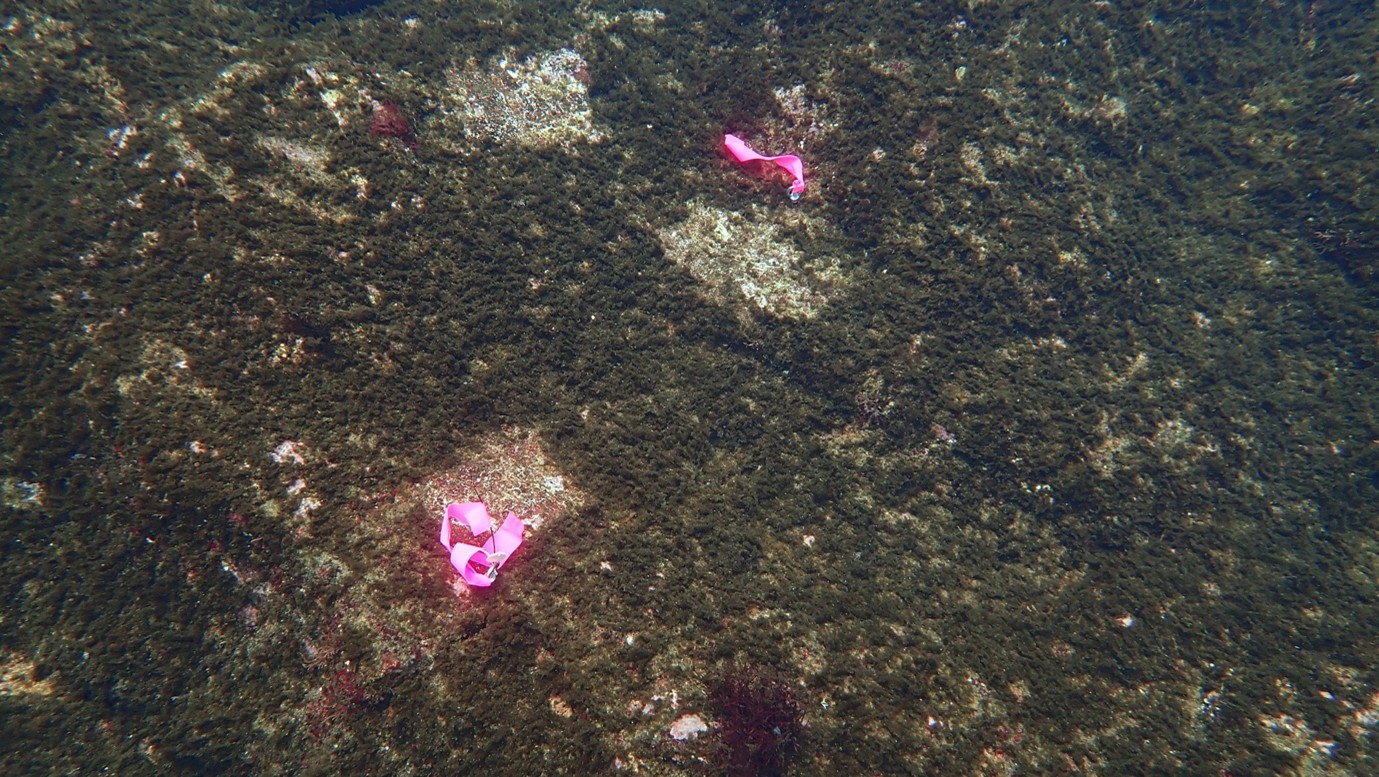
We focused on the neon damselfish, Pomacentrus coelestis, a small damselfish species that naturally forms shoals. Over four years, including during an unprecedented heatwave event in 2023, we filmed their behaviour underwater and tracked how much time individuals spent foraging, swimming around, and retreating to shelter. We also counted the fish, measured the habitats, and estimated how much food was available.
Warming and acidification had little direct effect on behaviour
Across all reef types, even during the heatwave, the fish behaved in much the same way. They kept feeding. They did not suddenly become more nervous. The direct effects of warming, acidification, and heatwave stress on individual behaviour were mostly minimal.
You could read that as good news. Fish holding their own against climate change. But when we looked at what actually caused how the fish were behaving, the answer was not temperature or water chemistry at all. It was how many fish were in the shoal.
Fish in bigger shoals foraged more and hid less. Fish in smaller shoals were more cautious, regardless of the reef conditions around them. Shoal size, not climate stress, was mediating the behaviours we observed.
That sent us back to ask a different question: why were shoals so much smaller on the acidified reef?
What acidification actually does to a reef
On non-acidified reefs, the benthos is structurally complex, a mix of algae, encrusting organisms, and vertical relief that gives reef fish the three-dimensional habitat they rely on. On our acidified reef, that structure was largely gone. The seafloor was dominated by short turf algae, flat and featureless.
There were far fewer fish. Not because the fish were sick or behaving strangely, but because the habitat could not support the same densities we observed on non-acidified reefs. With fewer fish around, the shoals that did form were much smaller: up to 79% smaller than shoals on nearby control reefs. And with smaller shoals came more cautious behaviour across the board.
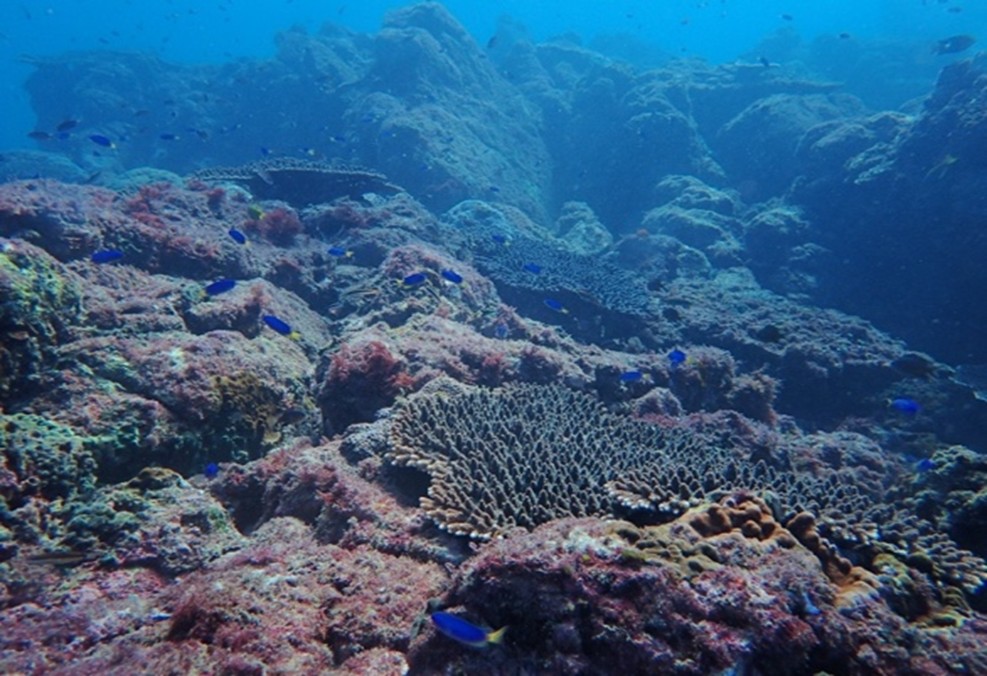
Ocean acidification was not changing how the fish behaved directly. It was changing the habitat, which reduced fish densities, which shrunk the shoals they could form, and ultimately shifted how individuals behaved. A seemingly invisible chain of effects, but one with clear consequences for how these fish live.
Food availability was also not the issue. The acidified reef actually had more zooplankton than the warmer reef nearby. not struggling to find food — they were struggling to find each other.
The part that is easy to miss
A lot of climate change research focuses on what happens to individual animals when you expose them to higher temperatures or lower pH. That work matters. But it can also give the impression that species are less resilient than they actually are in the wild, because it misses the ecological context that behaviour depends on.
In the real world, fish do not experience climate change in isolation. They experience it as members of communities, shaped by the habitat around them and the other individuals they live alongside. Our results suggest that even when individual fish seem to be coping fine behaviourally under climate stress, the social structures supporting their behavioural expression can quietly fall apart.
This probably is not unique to reef fish. Group living is widespread across the animal kingdom, and many of the benefits it provides depend on having enough individuals around to form a functional group in the first place. If climate change degrades habitats and thins populations, it could erode those benefits in ways that do not show up in studies of individual physiology.
The fish we studied were not behaviourally stressed by climate change. But they were increasingly on their own. And for a social animal, that turns out to matter quite a lot.
Read the paper
Read the full paper here: https://doi.org/10.1111/1365-2656.70270

