This blog post is provided by Caio S. Ballarin and tells the #StoryBehindThePaper for the article, “Optimising daily sampling of plant–bee interaction networks”, which was recently published in the Journal of Animal Ecology. This study tracked plant-bee interaction networks throughout the day, revealing how interactions shift from dawn to dusk. They provide a framework to optimise sampling strategies that capture ecological network structure more accurately and efficiently.
A world ruled by clocks and calendars
Humans are creatures of rhythm. We hang our lives on the turning of the planet: the calendar tells us when to plant and harvest, the seasons mark festivals and migrations, and the clock on the wall slices each day into hours of work, rest and play. We celebrate the solstice, the new year, and the morning coffee. Without noticing it, we read the universe like a great timetable.
Nature keeps time too. At every scale, a different story unfolds. Across the year, flowers bloom and fade. Across a single day, a meadow is not one place but many: the early-morning visitors, the midday crowd, and the quieter late afternoon each belong to different groups of plants and bees. A bee visiting a flower at dawn may never cross paths with the one that arrives at noon.
The problem with a snapshot
Ecologists love to draw interaction networks: webs of who interacts with whom, linking, for example, plants to the bees that pollinate them. These webs are powerful, but they are usually built from a single snapshot: a few hours in the field, stitched together as if the whole day looked the same. We wondered what that snapshot leaves out.
To find out, we took a different approach. In a Brazilian Cerrado savanna, my colleagues — Jorge Isla, Blanca Arroyo-Correa, Elena Quintero, Leandro Hachuy-Filho, Felipe Amorim, Pedro Jordano — and I tracked plant-bee interactions from dawn to dusk over two flowering seasons, splitting every day into six two-hour time-slices. By the end, we had recorded more than 24,000 plant–bee interactions, enough to watch the network change hour by hour as different bees came and went throughout the day.
Every hour tells a different story
It turned out the plant–bee interaction network really does change through the day, much as our own routines shift from breakfast to lunch to dinner. What looks like a single network is actually a moving target, with different bees and plants taking centre stage as the hours pass. Early in the morning, only a few specialist bees are active, each visiting its preferred flowers. Around midday is busiest: generalist visitors are abundant, most plants and bees interact with many partners, and the interactions blend into a dense, well-mixed pattern. By late afternoon, activity declines, and a smaller set of persistent visitors remains.
Several mechanisms drive these shifts. Many plants follow what Linnaeus famously called the “floral clock”: plant species follow different flowering schedules. Some flowers open later in the day, while others close earlier, meaning pollinators outside those windows cannot access them. Plant rewards are dynamic too. Nectar can be scarce in the early morning and abundant later, or the reverse, which changes who finds it worthwhile to visit. Temperature plays a part as well. Although many bees can generate heat and regulate body temperature, they remain strongly influenced by environmental conditions. This means that cool mornings and hot afternoons often attract different sets of visitors. Nectar can change over the course of the day, sometimes becoming more concentrated as water evaporates under warm, dry conditions. Because of these time-sensitive phenomena, partners keep swapping. The same plants and bees are present for much of the day, but who visits whom shifts from one hour to the next. We can think this reshuffling as “interaction turnover”: the further apart two periods of the day, the more different their networks become, as species stop interacting and new interactions take their place. Morning and dusk are almost like two separate worlds sharing the same field.

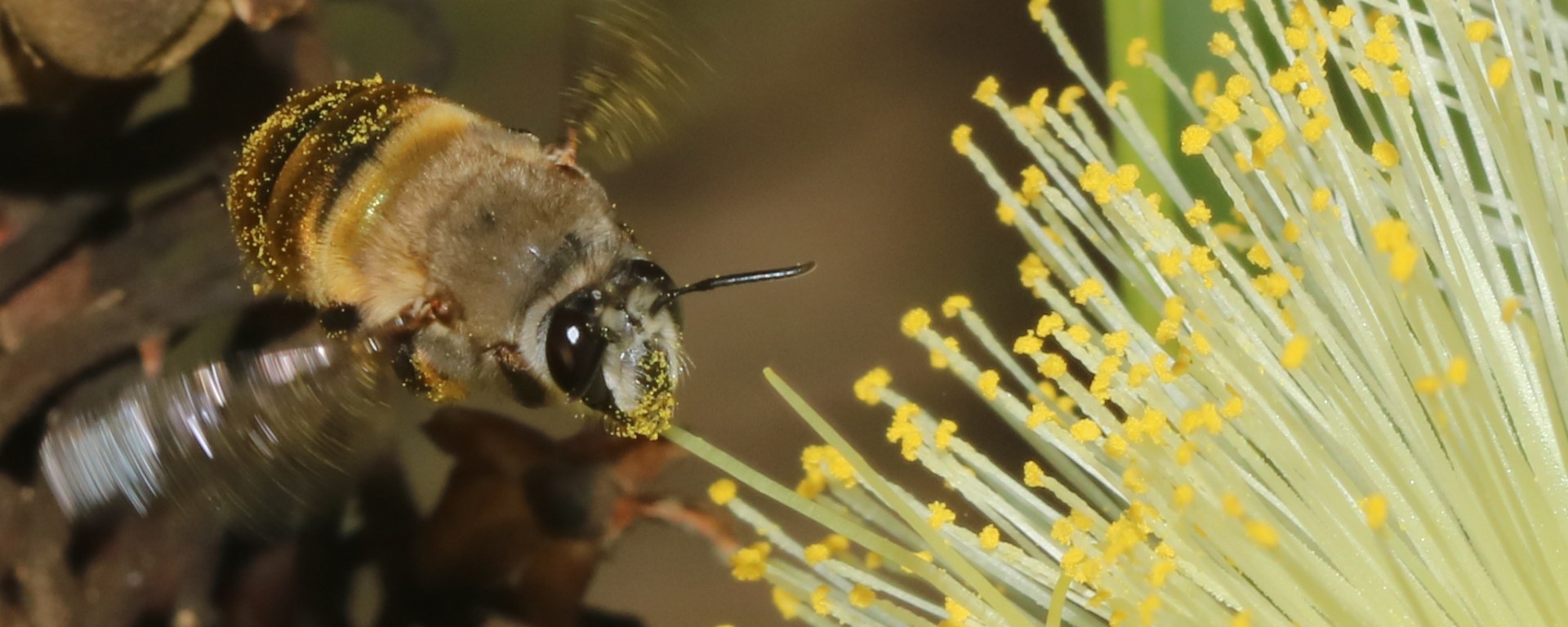
Ptiloglossa sp., a nocturnal bee species, visiting Caryocar brasiliense before dawn. Photo by: Felipe W. Amorim
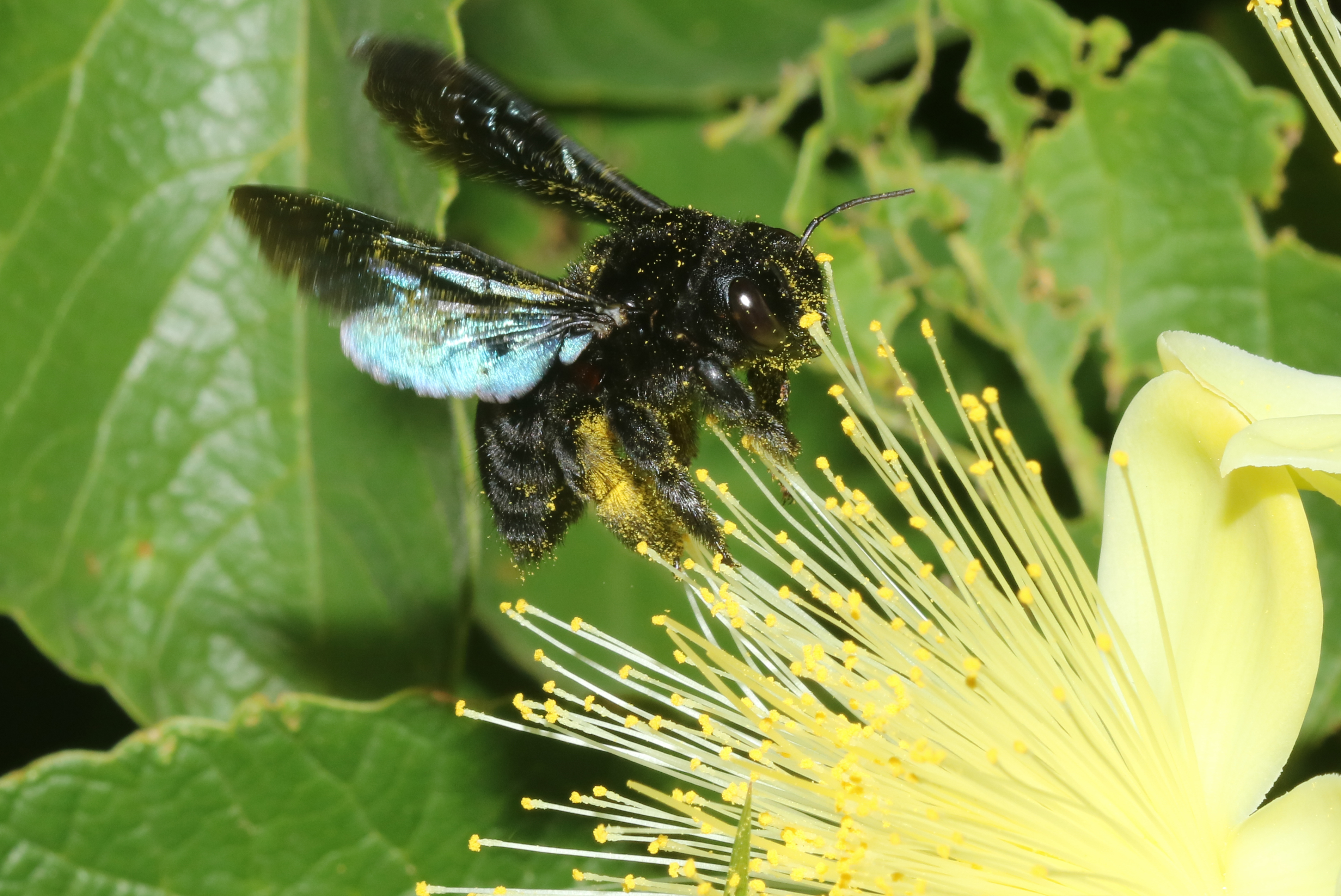
Xylocopa sp. visiting Caryocar brasiliense later in the morning. Photo by: Felipe W. Amorim
When time complicates comparisons
Because each hour tells a different story, the time of day you happen to sample can shape the conclusions you draw. This has an important implication. If two similar communities are sampled at different times of day, they may appear more different than they really are. Differences that we attribute to habitat, climate or geography may sometimes reflect nothing more than the hour on the clock. In other words, finding two networks that look different is not always evidence that different ecological processes are at work.
A recipe for smarter sampling
Watching every flower all day, every day, is a luxury most projects cannot afford. So, we built a simple framework to ask: how much of the daily story can you capture from a few well-chosen hours?
By combining sampling windows strategically and using about four two-hour periods, we recovered around four-fifths of all interactions. The best hours depend on your goal. Want to capture the busy backbone of common interactions and the overall shape of the network? Focus on the central, midday hours. Want to hunt for rare, specialised or unusual partnerships? Spread your effort towards the edges of the day, the early morning and late afternoon, where the oddities hide.
Our framework also lets researchers check how representative their chosen sampling really is. A way to ask, before drawing conclusions, “how much of the day am I actually seeing?”
Of course, these recommendations arise from our particular system and should not be treated as universal rules. Yet the broader lesson may apply elsewhere: understanding a community’s temporal dynamics can help researchers design more efficient sampling strategies. Knowing a system’s rhythm may reveal when sampling is most informative.

Illustration of time-slice sampling across the day. Painting by: Antonio Isla.
Why this matters
Pollination keeps wild plants and many of our crops alive, and we increasingly rely on interaction networks to judge the health of these relationships and how they respond to a changing world. If those networks are shaped by the hour we visit, then comparisons across places, habitats or years can be thrown off without anyone realising.
By treating time of day as a real ecological dimension, we can design fieldwork that is fairer, more efficient and easier to compare. The take-home message is simple: when you study who meets whom in nature, always remember to ask what time it is.
Read the full paper: https://doi.org/10.1111/1365-2656.70309

