Reflections from our Executive Editor, Dr Nate Sanders
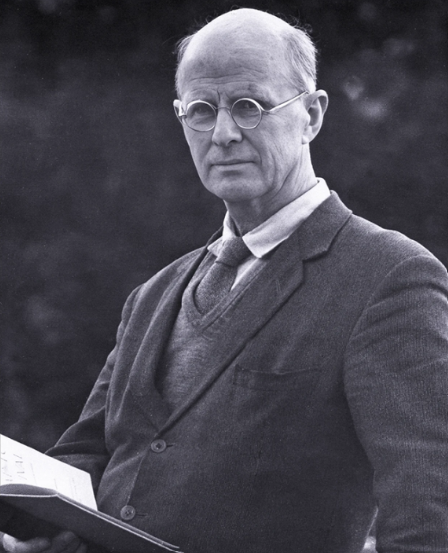
Nearly 100 years ago, a 27-year-old Charles Elton published Animal Ecology, a foundational book that helped launch a new science. The book launched and defined the scientific study of how animals interact with one another and their environment. Drawing inspiration from the emerging study of plant communities, Elton argued that animal communities also had structure, dynamics, and predictable patterns, even if ecology was still learning how to describe them. He writes cogently about succession in animal communities and highlights that communities aren’t static, and we really shouldn’t worry about developing rules of succession for animal communities just so they can be broken. He stressed the role of temperature and other environmental factors, including microclimate, in shaping the distribution and activity of individuals and species. He also highlighted the role that interspecific interactions, especially from parasites and non-native species, play in shaping communities. And throughout Animal Ecology, Elton moved effortlessly between the lives of individual organisms and the structure of entire ecological systems, a challenge that remains central to ecology today.
Many of these ideas were beginning to emerge among naturalists and ecologists, but Elton’s genius was synthesis: recognizing patterns, naming them, and turning observations into a conceptual framework. The novel insights and concepts emerge only later in the book, where Elton formalizes the concepts of trophic interactions, what came to be known as Eltonian niches, and ecological pyramids. He relates these ecological concepts to a trio of Chinese Proverbs:
“The large fish eat the small fish; the small fish eat the water insects;
the water insects eat plants and mud.”
“Large fowl cannot eat small grain.”
“One hill cannot shelter two tigers.”
Any ecologist, indeed, any layperson knows what each of these proverbs intends to convey, but Elton formalized it for ecologists and spurred decades of research. Similarly, he began to think about how parasites disrupt food webs (but acknowledged that they are not so different from predators) while foreshadowing research on consumer-resource interactions that wouldn’t come to fruition for decades. He also highlighted what wasn’t known at the time, but should be – why do some animals forage during certain times of the day or year? Is that because of microclimate or interactions from other species? Ecologists have spent decades pursuing that question.
And what regulates the number of individuals in a population? Elton grappled with ideas that would later become central to ecology: density dependence, population regulation, top-down control, resource limitation, outbreaks, and the indirect consequences of interactions across food webs. These are concepts that populate the pages of Journal of Animal Ecology today. Similarly, he began to ask why populations vary from time to time – what governs population dynamics? Again, this topic has been the bread and butter of Journal of Animal Ecology for decades.
Finally, Elton ended with chapters on how to go about doing the science of animal ecology – what methods should an animal ecologist employ to study animals in their environment – and a chapter on the links between ecology and evolution in which he cogently argues that one cannot understand evolution without ecology, nor ecology without understanding evolution.
I read Elton’s Animal Ecology for the first time, maybe 25 or 30 years ago, and read it again about a month ago. And here’s a sentence I never thought I’d type: It’s a bit like reading Darwin’s Origin of Species because as I re-read Animal Ecology, I realized that there are so many contemporary problems in ecology that Elton had thought about, foreshadowed, and predicted outcomes of, nearly 100 years ago. And that’s why celebrating 100 years since the publication of his foundational book with a Special Feature to appear next spring in Journal of Animal Ecology.
If you are interested in contributing to the Special Feature please submit a proposal, including a statement of how your manuscript relates to a concept or idea in Elton’s Animal Ecology from 1927, here. If you do not have a copy on your shelves (though you should….), there is a free version online here. We are soliciting proposals for papers that build on Elton’s insights in Animal Ecology and the concepts Elton introduced and formalized within it. We are especially interested in contributions that return directly to Elton’s text – a quote, observation, definition, unresolved question, or conceptual insight – and use it as a starting point to ask what we have learned over the past century. We welcome all paper types – Research Articles, Reviews, Concepts, Forum, Research Methods Guide, or Long-term Studies. Please submit proposals by September 15, 2026.
If you have any questions, please get in touch with Nate Sanders at njsander@umich.edu or the editorial office at admin@journalofanimalecology.org.
We are also convening a one-day symposium at Oxford University on April 15, 2027 to celebrate Elton, Animal Ecology and the Special Feature… more details on that to come.

