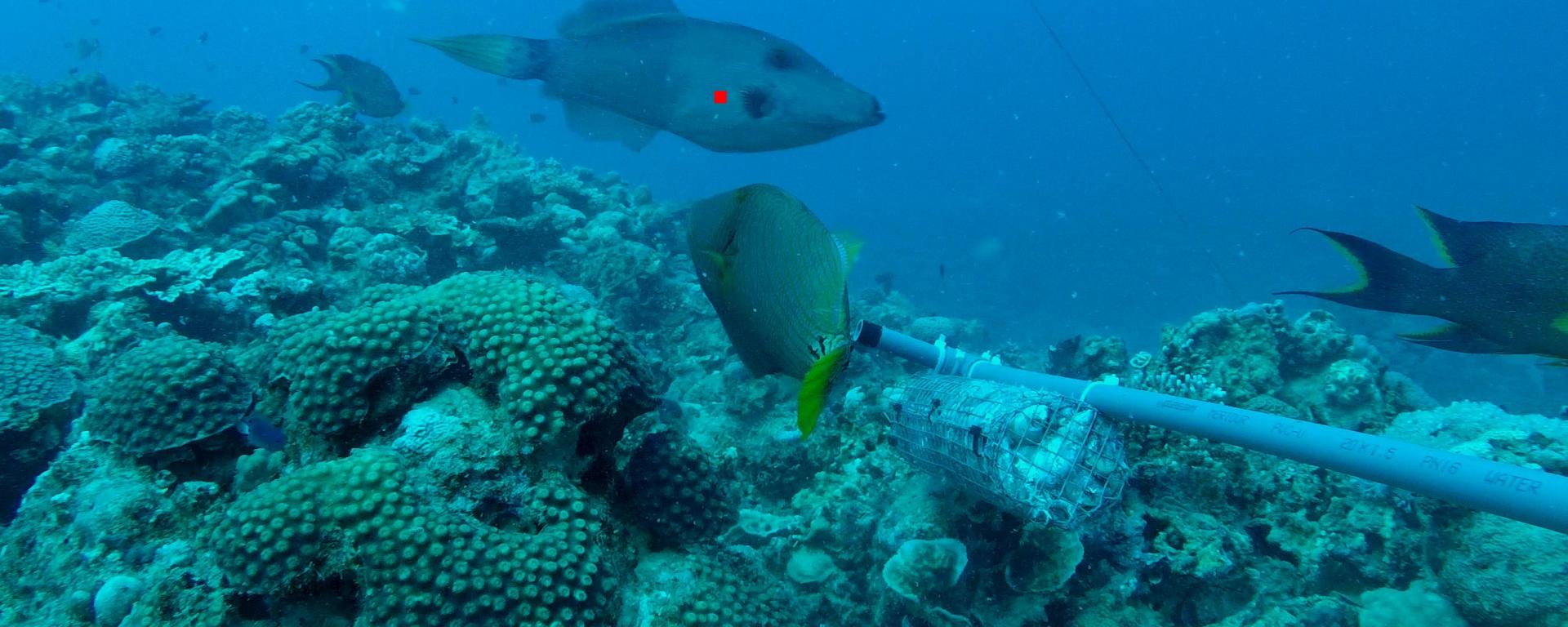
This blog post is provided by Shahar Chaikin and tells the #StoryBehindThePaper for the article, “Native habitat affinities predict fish invasions with post-invasion habitat shifts”, which was recently published in the Journal of Animal Ecology. This study tracked fish populations within their native Red Sea range and into their invaded Eastern Mediterranean range, revealing traits that drive invasion success and highlighting how pre-invasion adaptations can better predict a species’ true invasion potential.
The Anthropocene is increasingly defined by a massive redistribution of species across the globe. One of the most dramatic arenas for this biological shift is the ongoing influx of marine species from the Red Sea into the Mediterranean Sea following the opening of the Suez Canal in 1869. It acts as an incredible historical experiment for biologists, providing a unique window into how and why certain species successfully invade novel environments.
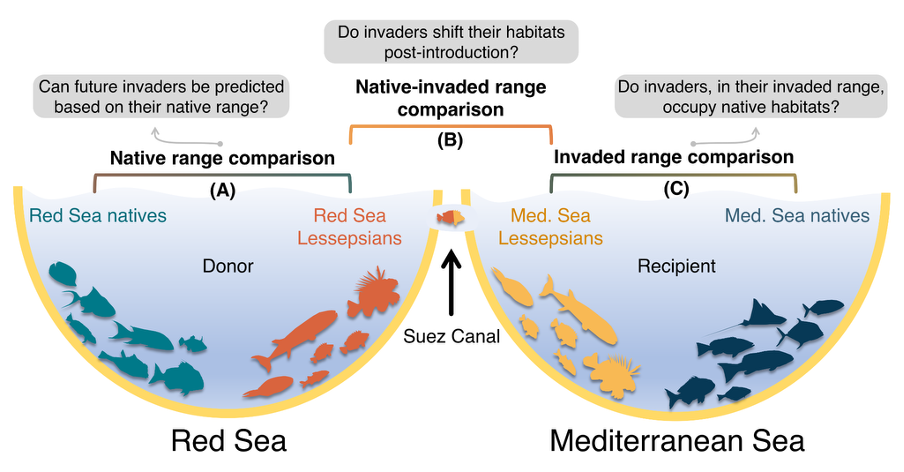
But predicting exactly which species will become the next invaders is a major ecological challenge. Traditionally, scientists have looked at the traits and habitats of introduced species only after they have already established themselves in their new homes. The flaw in this approach is that it conflates the intrinsic pre-adaptations that allowed the species to invade with the habitat shifts they adopted post-invasion.
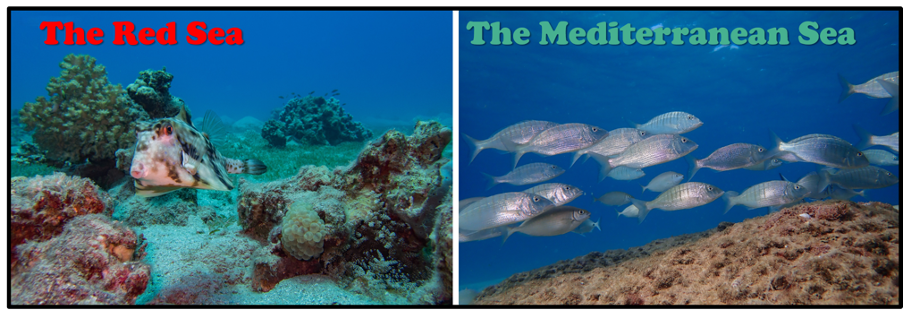
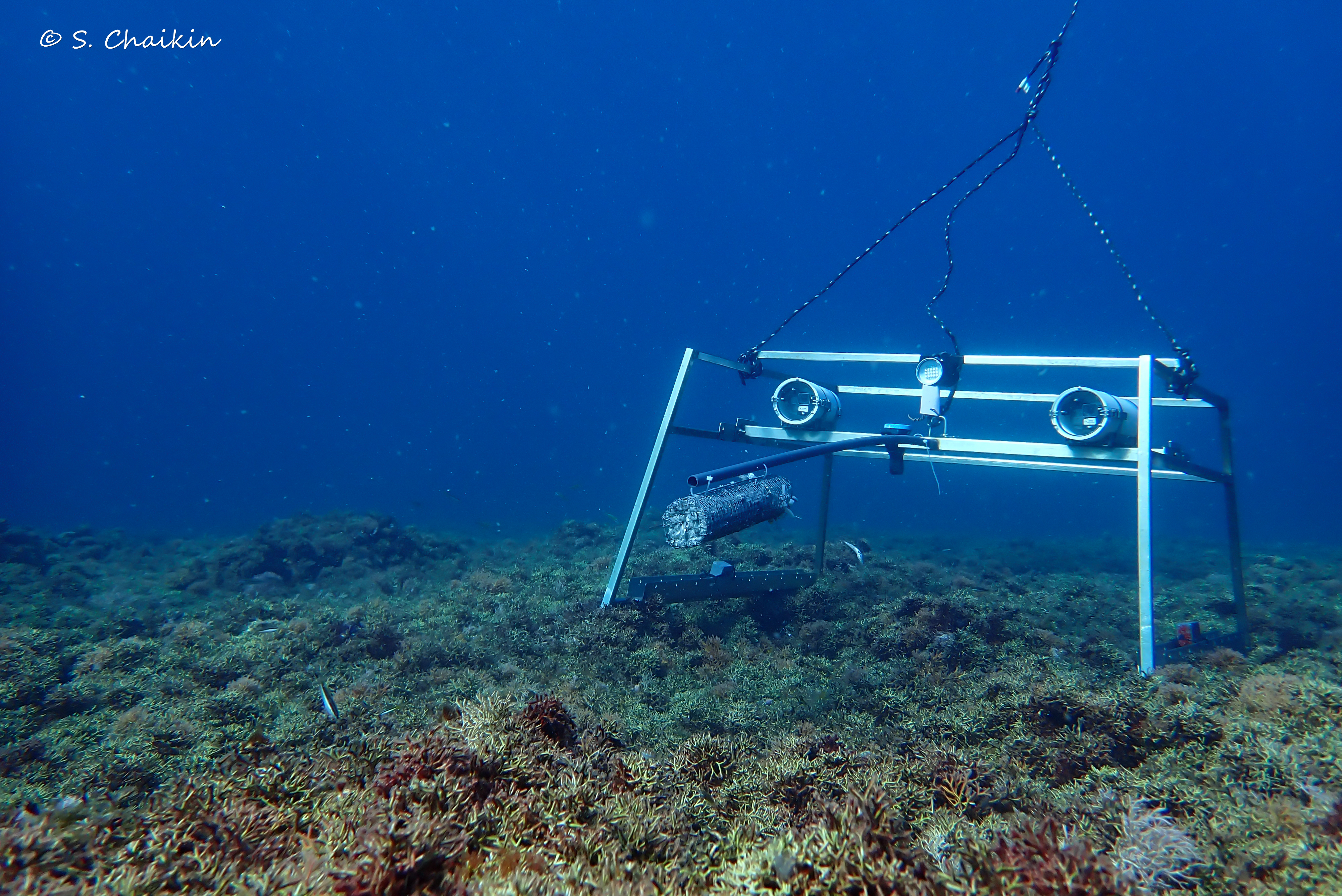
Untangling this timeline was a great collaborative field and lab effort. Working alongside my co-authors — Dr. Tal Gavriel, Avery Deveto, Shahar Malamud, and Prof. Jonathan Belmaker — we set out to study these species across their invasion pathway. We deployed standardized stereo-Baited Remote Underwater Video surveys (stereo-BRUVs) to observe the fish in their natural habitats without removing them from the ecosystem. By capturing hundreds of hours of footage, we mapped the fine-scale habitat affinities of 179 distinct fish populations across both the native Red Sea and the invaded Eastern Mediterranean ecosystems.
By comparing the habitats these fish use within their native Red Sea and invaded Mediterranean regions, we uncovered a fascinating pattern:
- A coral filter: We found that a necessary pre-adaptation for an invader is independence from coral habitats. Because the Suez Canal and the Mediterranean largely lack complex, reef-building corals, species dependent on these habitats are likely to be filtered out early in the invasion process.
- Post-invasion habitat flexibility: Once established in the Mediterranean, these fish do not strictly stick to their old habitats. Instead, they exhibit remarkable habitat lability, abandoning their native habitat associations to exploit newly available Mediterranean environments.
- Habitat integration: Rather than occupying distinct, vacant habitats, the introduced species substantially overlap with native Mediterranean fish in their fine-scale habitat use. This integration suggests an elevated potential for competition within the warming Mediterranean Sea.
Ultimately, this means that if we only look at how a fish behaves in its native range, we might severely underestimate how far it can spread and the impact it can have in a new environment.
By synthesising our data across more than 100 native Red Sea species, we were able to create a predictive consensus index to flag high-risk candidates for future invasions — species like the Stellate puffer (Arothron stellatus), the Cinnabar goatfish (Parupeneus heptacantha), and the Yellowspotted trevally (Turrum fulvoguttatum). As ocean warming continues to alter marine ecosystems, we hope our predictive watchlist will serve as a vital tool for early detection and proactive conservation management.
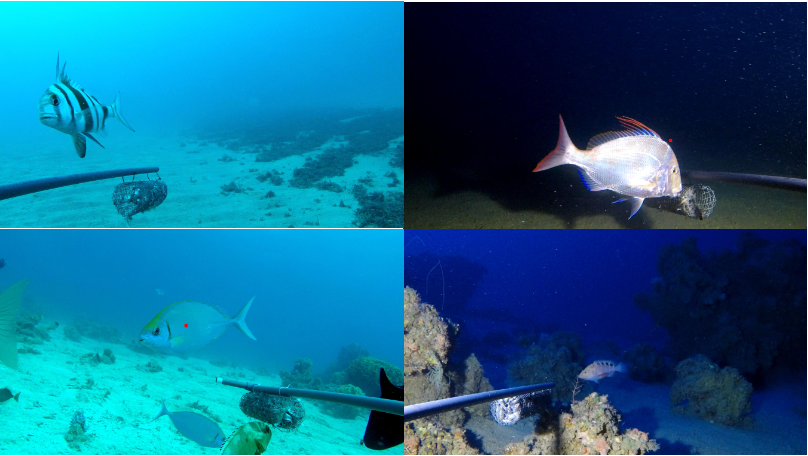
Watch the video teaser here: https://youtu.be/_OI8w4ZsDDs
Read the full paper here: https://doi.org/10.1111/1365-2656.70293

