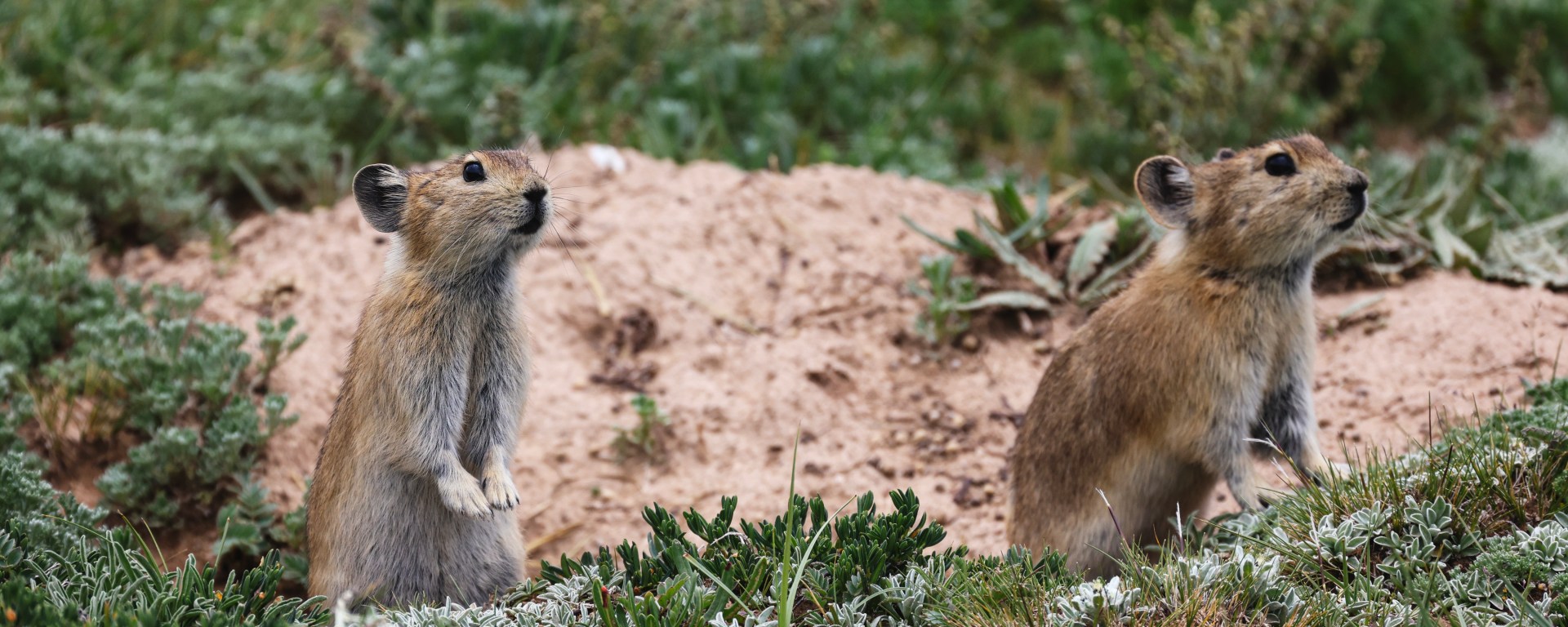
This blog post is provided by Yangheshan Yang and tells the #StoryBehindThePaper for the article “Unexpected asymmetric Qinghai-Tibetan wildlife dietary response to anthropause: rapid initial shifts and a slow return”, which was recently published in Journal of Animal Ecology. In their study, Yang and colleagues show the effects of the COVID-19 pandemic on the diets of roadside pika populations on the northeastern Qinghai-Tibetan Plateau.
We did not set out to study the anthropause.
When we began monitoring pika populations on the northeastern Qinghai-Tibetan Plateau in 2018, our aim was much simpler: to understand how living beside busy roads might affect what these small mammals eat. Most natural pika populations live in alpine meadows away from major roads, but some have become established immediately beside highways. This gave us a useful comparison between roadside populations and nearby populations living in relatively undisturbed meadows at least one kilometre away.
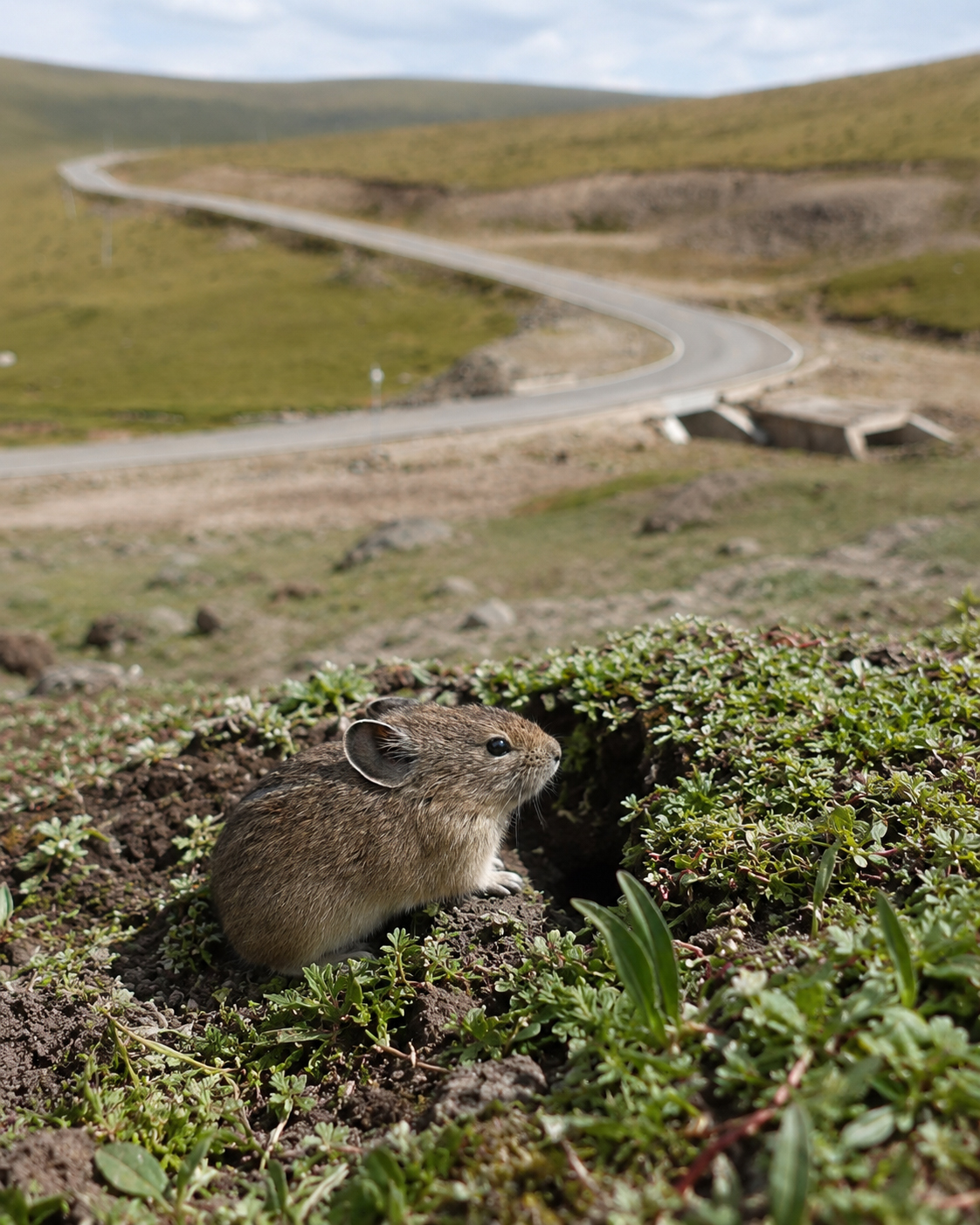
Then the pandemic changed the roads.
Between 2020 and 2022, strict inter-city travel restrictions in China greatly reduced traffic across the plateau. By chance, our study now covered two years before this decline in traffic, three years during it, and two years after traffic returned. A long-term diet study had become something we could never have planned: a seven-year natural experiment in changing human disturbance.
What were the pikas eating?
We collected fresh faecal samples and used DNA metabarcoding to identify the plants the pikas had eaten. At the same time, we surveyed the surrounding vegetation and recorded traffic density.
The vegetation data were important because they told us what food was locally available. If pika diets changed while the plant community around them did not, then the change could not simply be explained by a different menu of plants.
Before the pandemic, roadside and meadow pikas had very different diets. In plateau pikas (Ochotona curzoniae), monocots such as grasses and sedges made up less than half of the roadside diet, compared with more than 90% in meadow populations. The contrast was even stronger in Gansu pikas (O. cansus): dicots made up more than 80% of the roadside diet, whereas meadow populations ate mainly sedges, with smaller amounts of grasses.
When traffic declined, roadside diets changed quickly
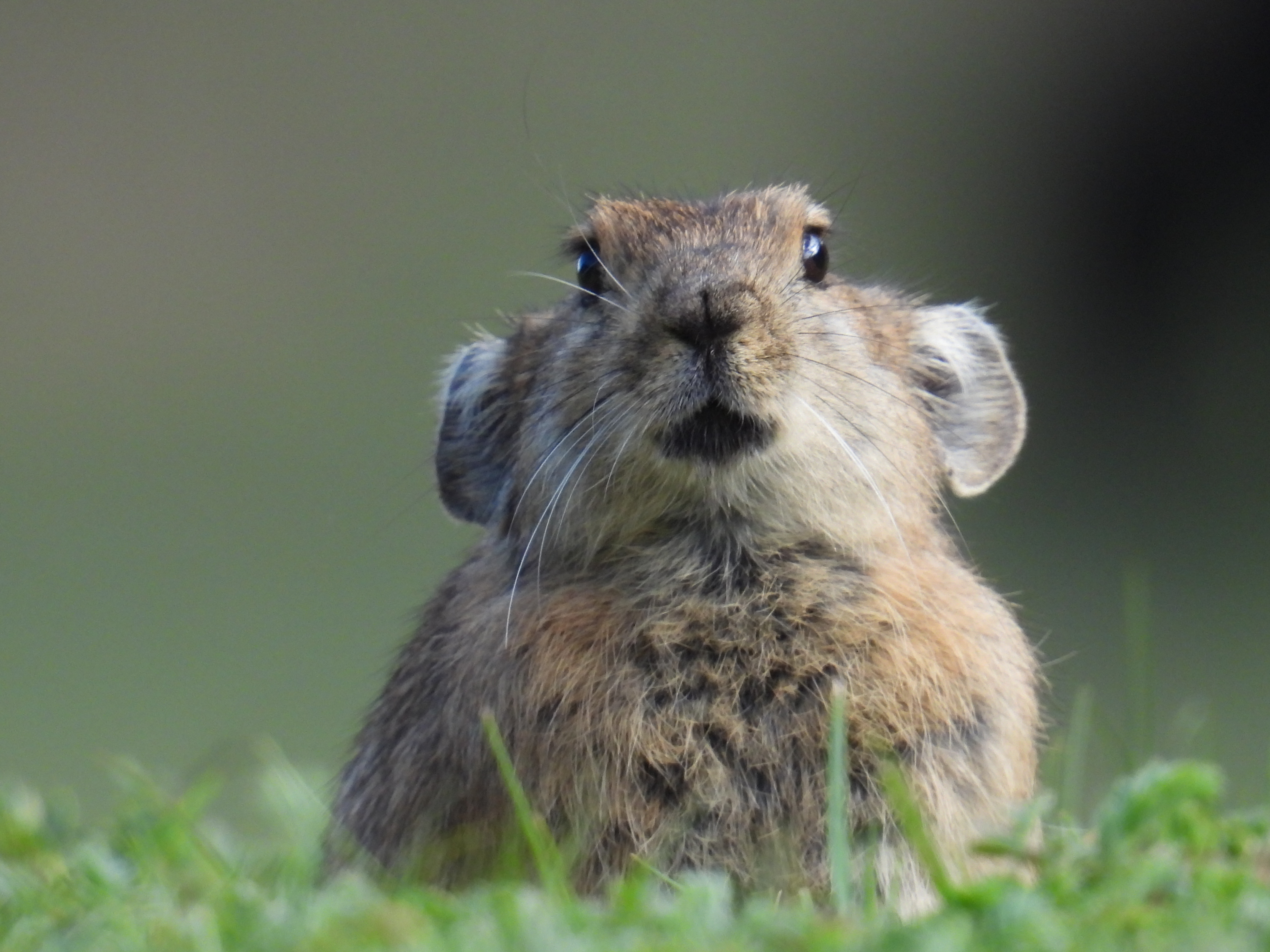
When traffic fell, those differences shrank quickly.
Roadside plateau pikas increased their consumption of monocots to nearly 80%, mainly because they ate more sedges. In roadside Gansu pikas, dicots fell from more than 80% of the diet to about 20%. Within roughly one pika generation, the diets of roadside populations had become much more like those of meadow populations.
The plants around them, however, had not changed in the same way. Roadside and meadow vegetation remained relatively stable across the seven years. In fact, during the anthropause, roadside pika diets became less similar to the vegetation immediately around them even as they became more similar to meadow diets.
That pattern is consistent with pikas changing how they selected or accessed food when traffic declined, rather than simply following changes in local plant availability.
The roads became busy again. The pikas took longer to respond.
What happened after traffic returned turned out to be just as interesting as what happened when it disappeared.
The roadside diets did not immediately return to their pre-pandemic state. Instead, the differences between roadside and meadow populations gradually re-emerged over the next two years. By 2024, plateau pika diets had returned to a level of differentiation similar to that seen before the anthropause. Gansu pikas were moving in the same direction, but their roadside and meadow diets were still less differentiated than before the pandemic.
So, the response was not simply reversible at the same speed. Diets changed rapidly when disturbance declined, but shifted back much more slowly when disturbance returned.
The traffic data told a similar story. Heavier traffic was associated with greater dietary differences between roadside and meadow populations. Under heavier traffic, roadside pika diets also more closely resembled the vegetation immediately around the roads.
We cannot yet say exactly why. Heavy traffic may restrict where pikas forage, or make them less selective about what they eat. Quieter roads may allow them to forage more freely. Testing those possibilities will require direct behavioural observations.
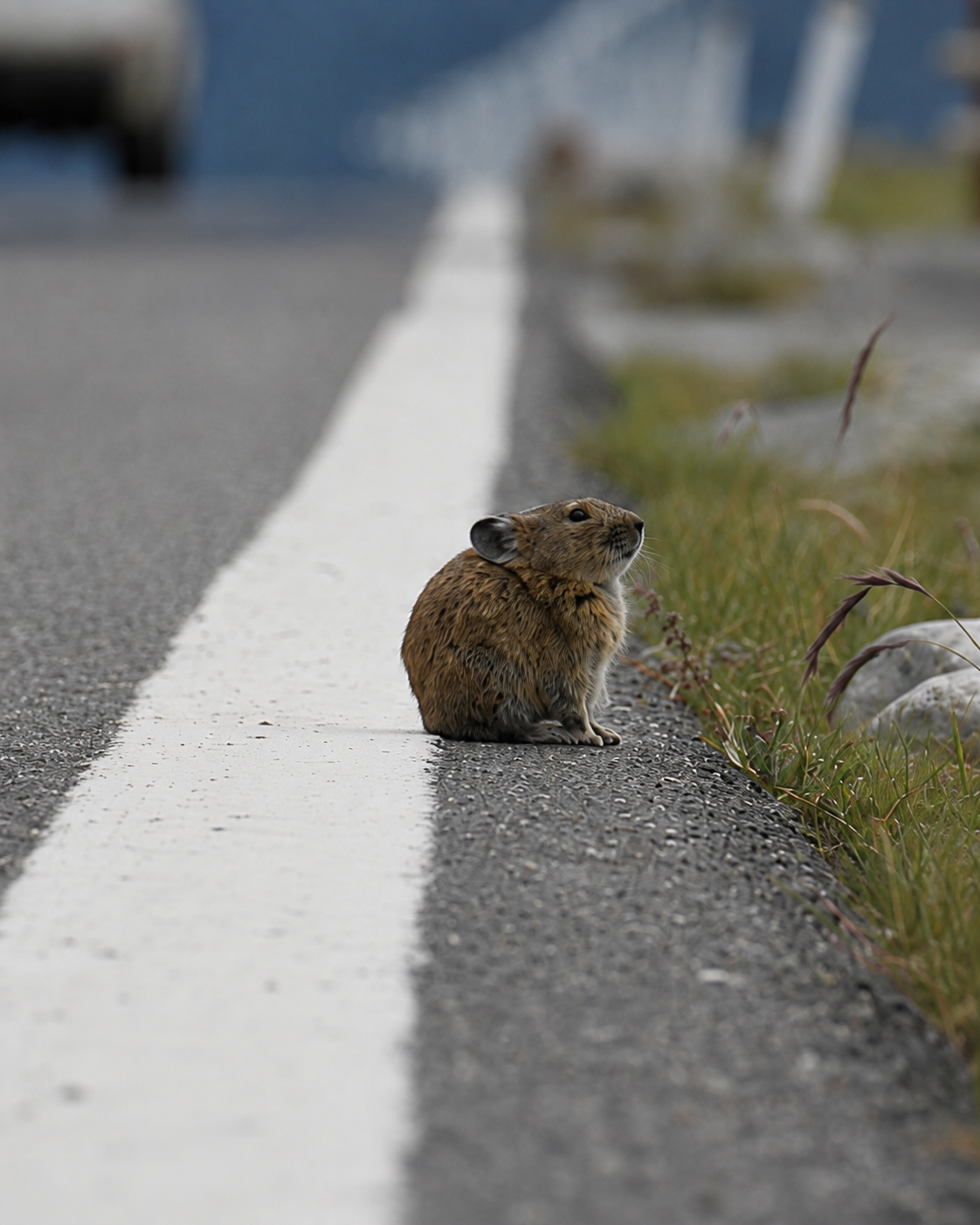
What we learned from a small roadside mammal
One lesson from this study is that animals living successfully in human-modified environments are not necessarily insensitive to human activity. These roadside pika populations had persisted beside traffic for years, yet their resource use still changed when the intensity of that disturbance changed.
The slower return also raises an interesting conservation possibility. If animals can respond quickly to a temporary reduction in disturbance but take longer to shift back afterwards, then the ecological effects of short-term traffic reductions may last beyond the quiet period itself. Seasonal traffic restrictions, temporary road closures or other targeted measures could therefore be worth considering in ecologically sensitive landscapes where permanent restrictions are unrealistic.
The pandemic was obviously not an experiment anyone would choose. But because our monitoring began before it and continued after traffic returned, it allowed us to see something that shorter studies could not: not only how wildlife responds when human activity suddenly declines, but also how slowly some of those responses may unwind afterwards.
Read the paper
Read the full paper here: https://doi.org/10.1111/1365-2656.70336

