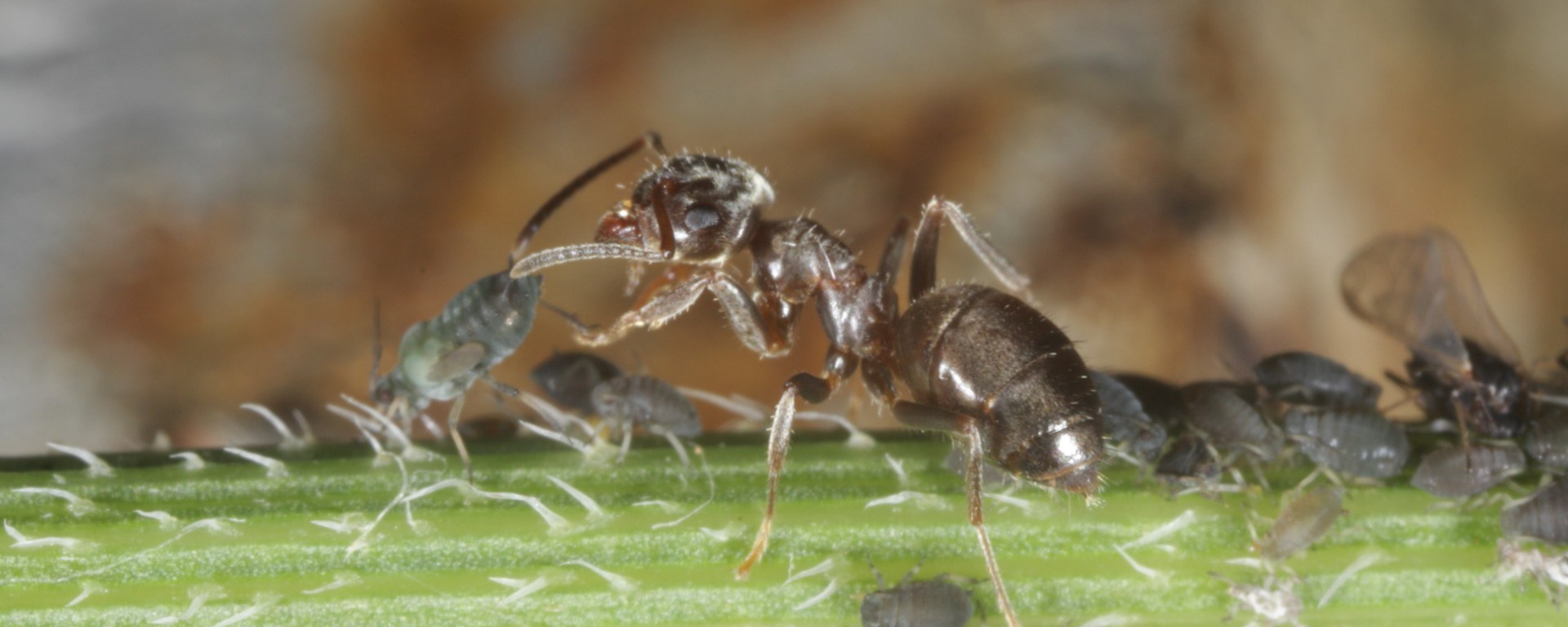
This blog post is provided by Rafael Carvalho da Silva, Maëlys Prost, Angélique Bultelle, and Thibaud Monnin, and tells the #StoryBehindThePaper for the article “Effects of heat stress on the foraging activity of incipient ant colonies”, which was recently published in Journal of Animal Ecology. In their study, da Silva and colleagues explored the impacts of prolonged heat exposure on the foraging activities of black garden ant colonies.
Extreme heat and ectotherms
The increasing frequency and intensity of extreme heat events associated with global warming raises the fundamental question of « how do organisms cope with unusual heat? ». The ability to regulate body temperature in response to environmental fluctuations is a key physiological adaptation in many animal species. In contrast, ectothermic animals largely rely on external environmental temperatures to regulate their body temperature, making them particularly vulnerable to episodes of extreme heat. Consequently, prolonged exposure to temperatures beyond their thermal limits can severely disrupt physiological processes and, ultimately, lead to irreversible damage or death.
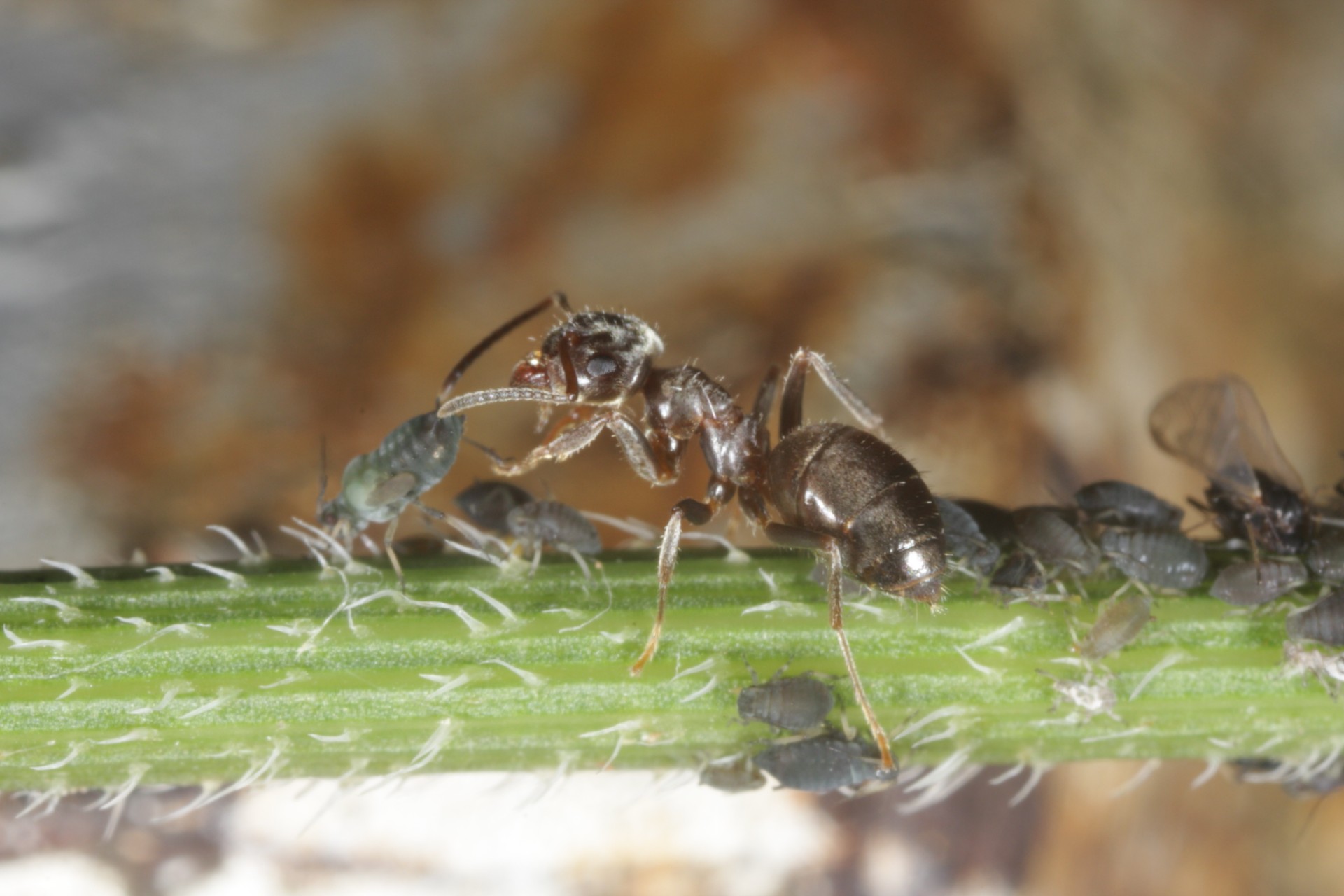
How do young ant colonies cope with heat stress?
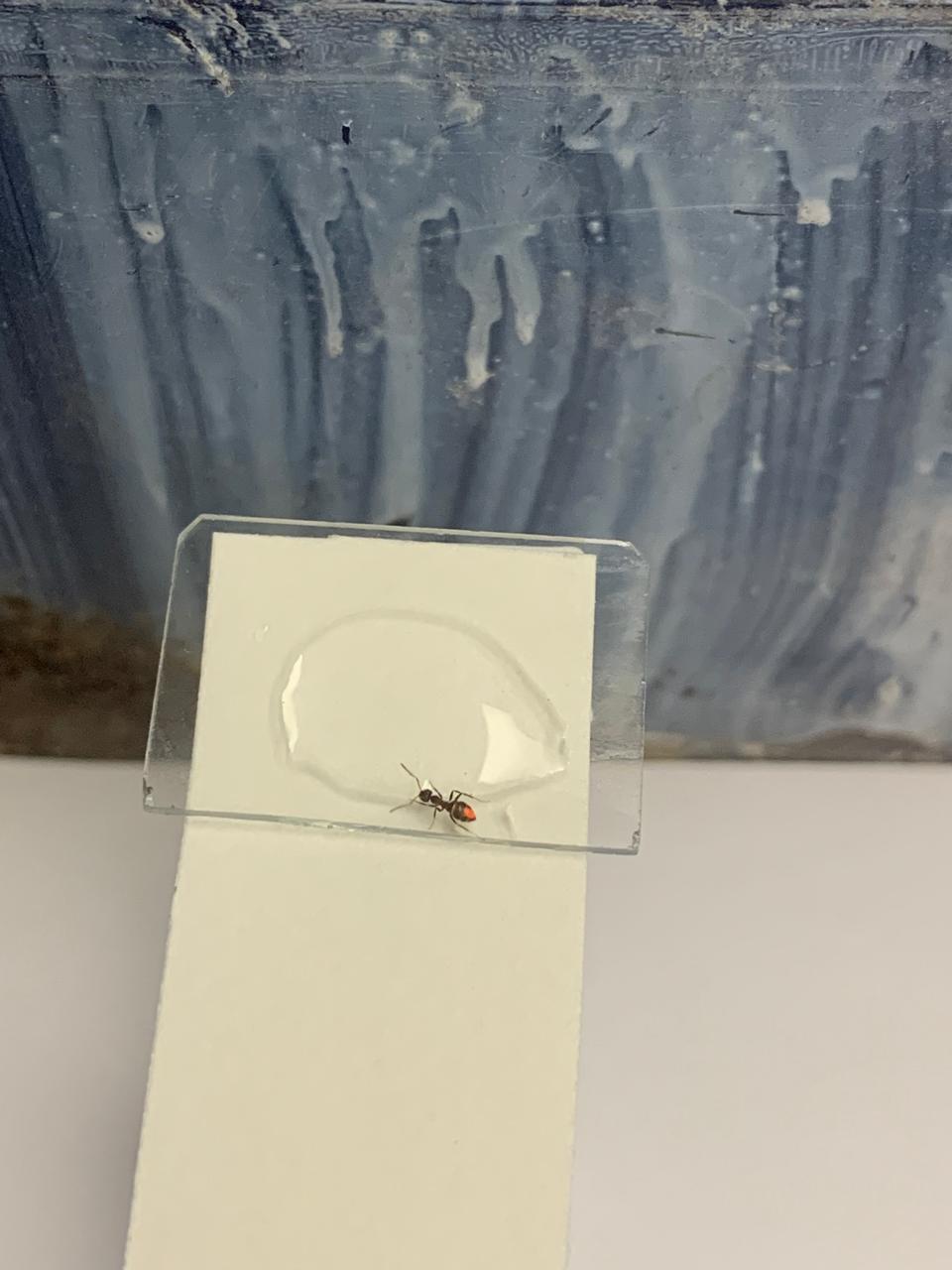
In a recent paper published in the Journal of Animal Ecology, we investigated how the interaction between heat intensity and duration of exposure affects young colonies of Lasius niger, one of the most common ant species in Europe, commonly known as the black garden ant. Colonies of this species comprise a single queen, several thousand workers, and brood. They may cope with heat stress through collective responses. For instance, colonies could compensate for the higher loss or the reduced performance of workers engaged in foraging (Fig 1) by reallocating other workers to these tasks.
Alternatively, colonies may have sufficient food reserves to avoid foraging during heat events and resume foraging only when environmental conditions become favourable again. Thus, beyond the direct effects of temperature on individual ants, the social organization may play an important role in determining the overall resilience of colonies to heat stress. However, recently founded colonies are more susceptible to thermal stress than mature colonies, just like saplings are more fragile than mature trees, hence we studied how this susceptible stage in the colony life cycle is affected by heat stress. Incipient colonies consist of a queen, a few workers only, and little brood (Fig 2). In this species, the first generation of workers are small-sized (“nanitic”) hence likely more susceptible to heat. Incipient colonies thus have a limited capacity for collective buffering and few or no food reserves.
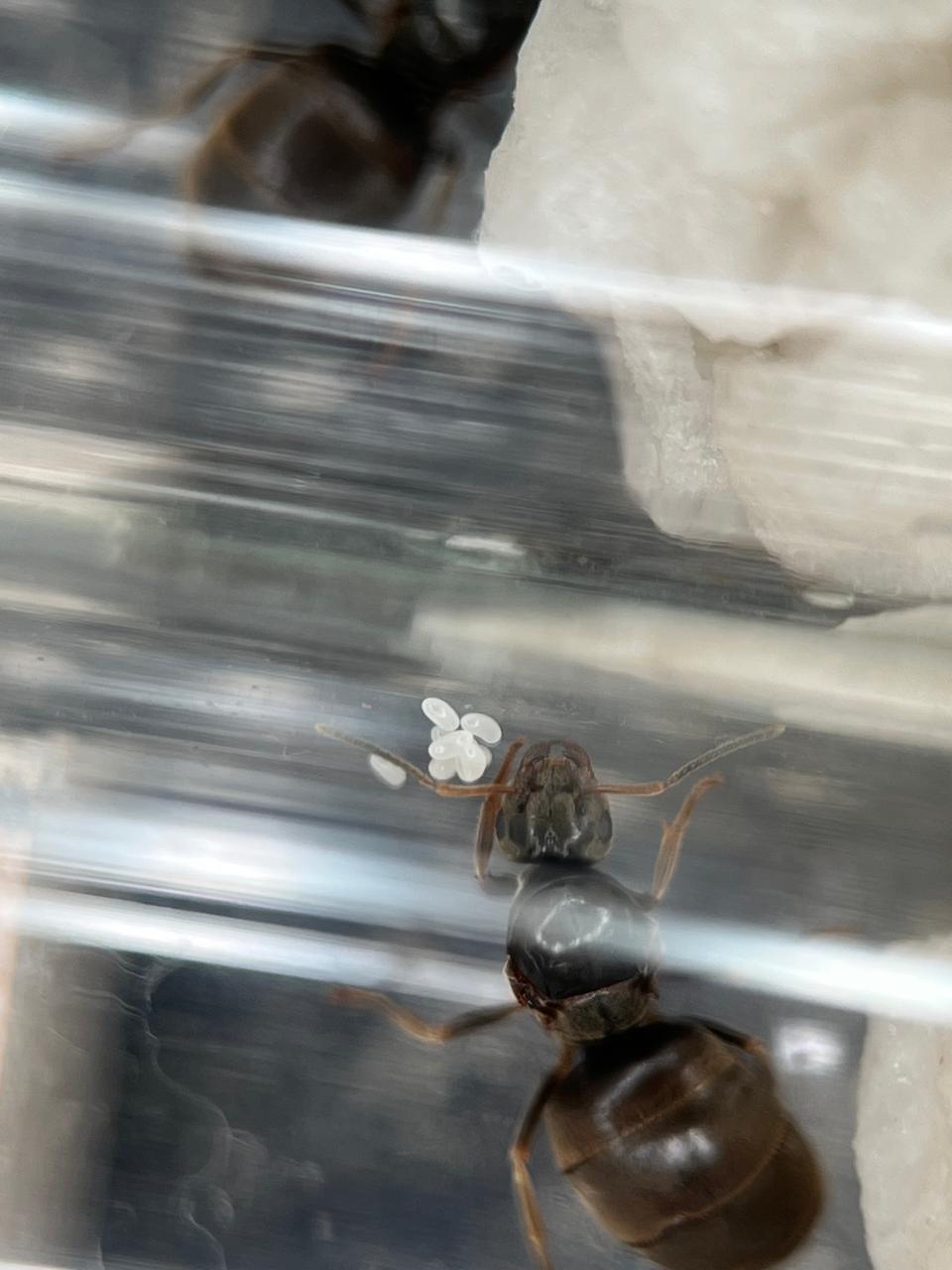
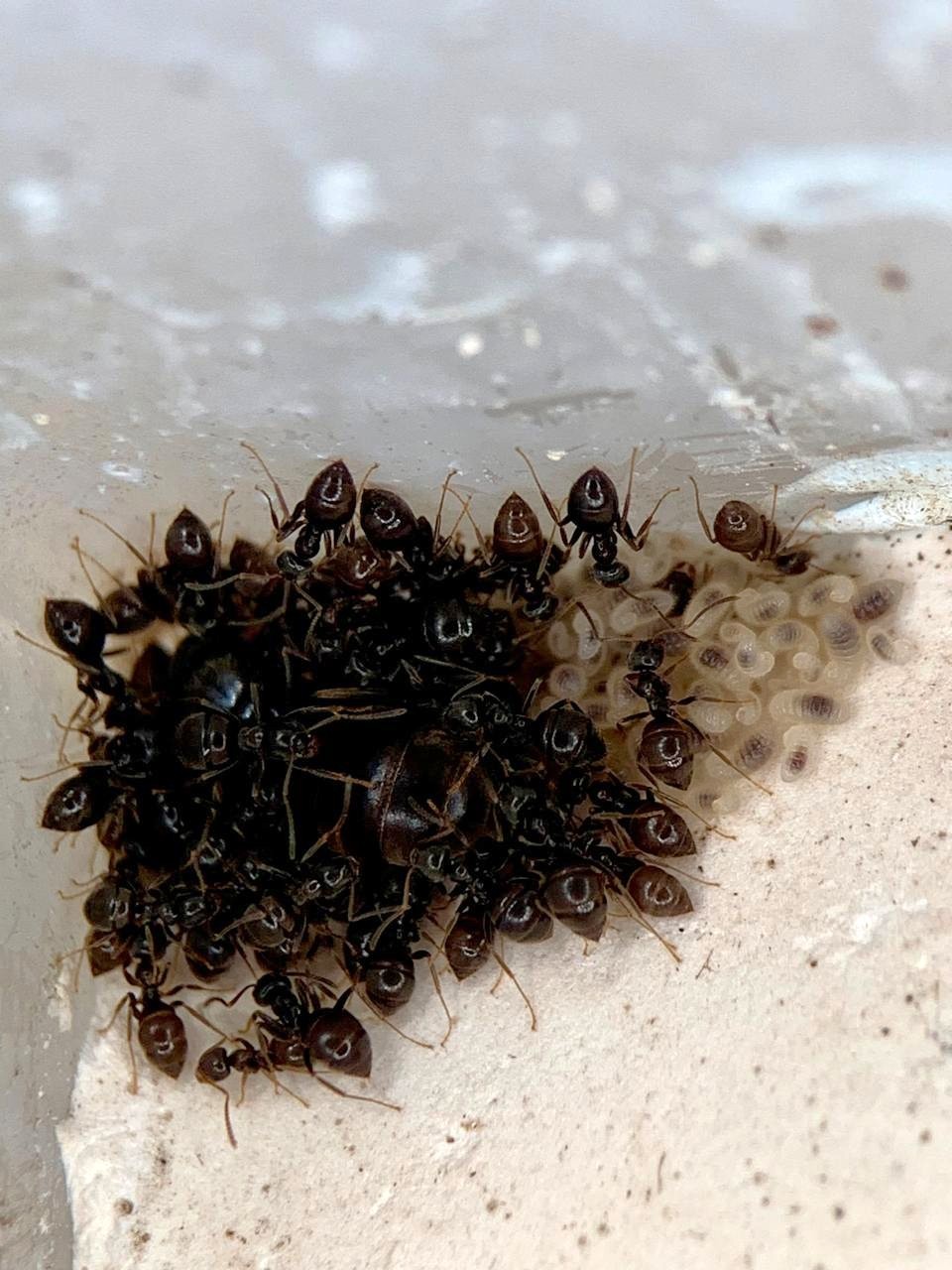
We measured how the combination of different heat intensities (25, 30, 35, and 40°C) and exposure durations (10min, 1h, and 2 weeks) affects the colony foraging performance and the mortality of foragers and colonies. We used incipient colonies of the same age (~8 months old) hence comparable size (13 ± 7.6 workers and 2.9 ± 7.7 larvae per colony), in order to minimise bias in foraging activity resulting from differences in workforce or the number of larvae to feed. We exposed workers to temperatures that they could realistically face in the field, together with exposure times that they could reasonably encounter.
The shorter exposures (10 minutes and 1 hour) were chosen to represent the time workers may spend exposed to high temperatures while foraging, whereas the two-week exposure was intended to represent the conditions that the whole colony may experience when temperatures remain high for longer periods (incipient colonies have shallow nests). Additionally, this combination of heat intensity and exposure duration could potentially induce or require different responses, as short-term exposure may not necessarily trigger the activation of physiological mechanisms, whereas chronic exposure may do so.
Short heat exposure has limited effects on foraging
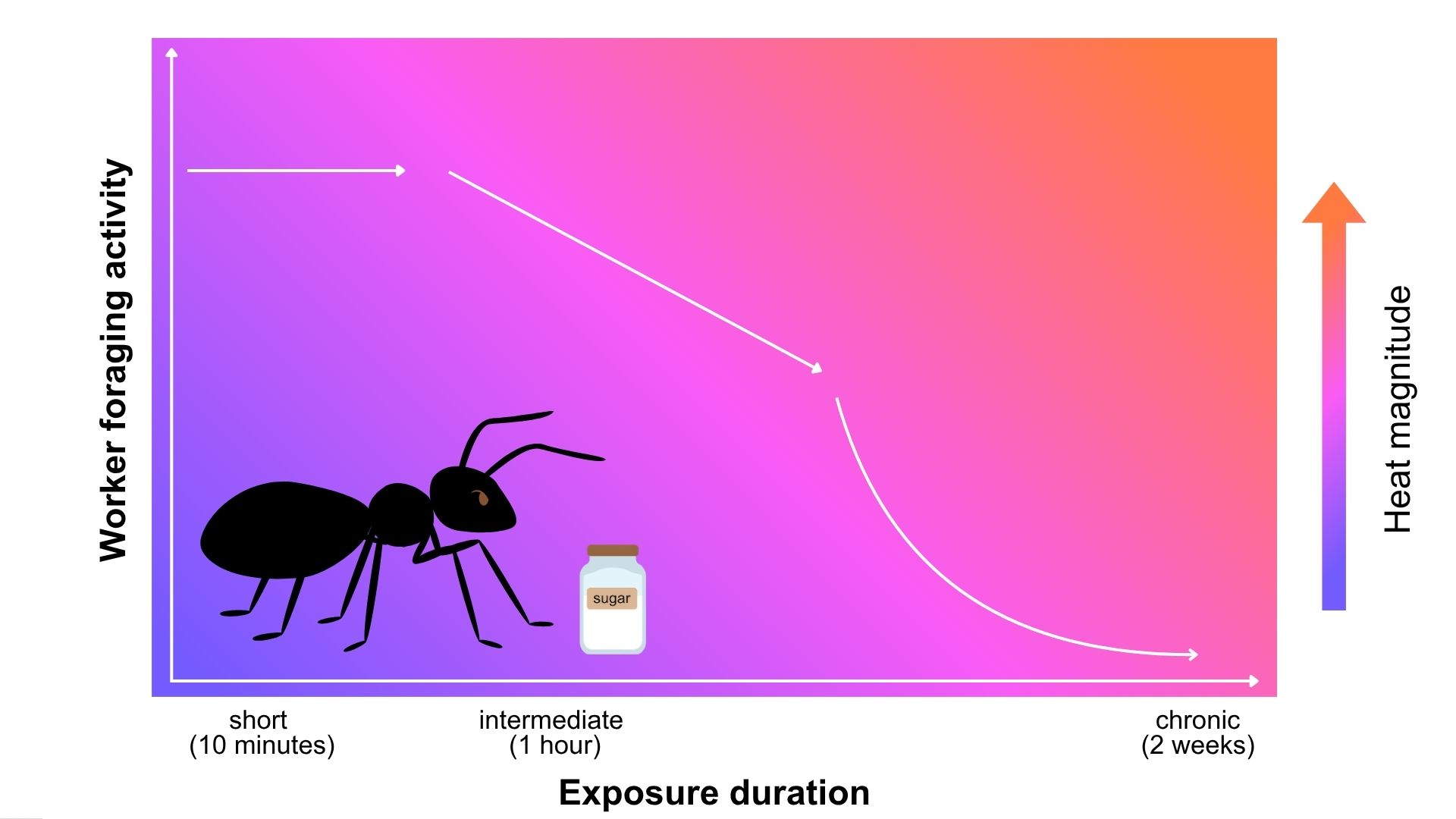
We found interesting results by combining these different variables in our experiment. Foraging activity was measured as the delay to start foraging after heat exposure, and the number of foraging bouts during the 4h observation period (Fig 3). The short, 10min, exposure to any temperature (within the tested range of 25-40°C) had no effect on the delay and the number of foraging bouts, showing that foragers did not change their behaviour following a short stress (Fig 4). This is despite the fact that the 40°C treatment was stressful, although well below the thermal limit of L. niger that is approximately 47°C (personal data), since at least one of the treated workers died in 32.26% of the colonies.
Longer exposures affect foraging and mortality
The intermediate, 1h, exposure clearly affected foraging. Workers exposed to 40°C took longer to start foraging and made fewer foraging bouts. Workers exposed to 35°C showed a similar delay before foraging than those exposed to 25 and 30°C, but they performed a number of foraging bouts intermediate between those of workers exposed to 25 and 30°C and those exposed to 40°C treatments. The intermediate exposure duration at 40°C also increased worker mortality, with at least one dead worker in 84% of colonies (Fig 4).
The chronic, 2 weeks, exposure showed a similar trend: stressed colonies experienced a longer delay before foraging, performed fewer foraging bouts, and suffered higher mortality (Fig 4).
What do these results mean in nature?
Altogether, these results demonstrate the interplay between heat intensity and exposure duration in shaping foraging activity and mortality in ants during a critical phase of colony ontogeny. Thus, in nature, incipient colonies may cope well with heat stresses as long as the duration of exposure remains limited. Heat waves are becoming increasingly frequent, and the delay between successive heat waves may be short. The speed of recovery following heat stress may therefore be important as well. Habitats richer in resources may reduce foraging time hence exposure to heat, but heighten conflict with competitors which would also be particularly costly for incipient colonies with few workers.
Looking beyond one species
Understanding how species deal with new ecological challenges is, unfortunately, timely. Whether the patterns we documented in L. niger apply at a larger geographic scale and to many other species remains to be determined, especially because ectothermic species differ in their thermal tolerances. Also, it would be of interest to investigate how daily temperature fluctuations (= temperature unpredictability) shape group foraging behaviour and how incipient colonies adjust foraging effort to workforce availability, as well as nanitic workers’ thermal resistance, desiccation dynamics and response to heat stress. Overall, we need more information on how different species may be affected by the ongoing increase in global temperatures.
Read the paper
Read the full paper here: https://doi.org/10.1111/1365-2656.70337
This work was supported by the Sorbonne University Alliance through the “SOUND – pour un nouvel engagement” project, funded by the French National Research Agency (ANR) under the France 2030 programme (grant no. ANR-22-EXES-0004).

