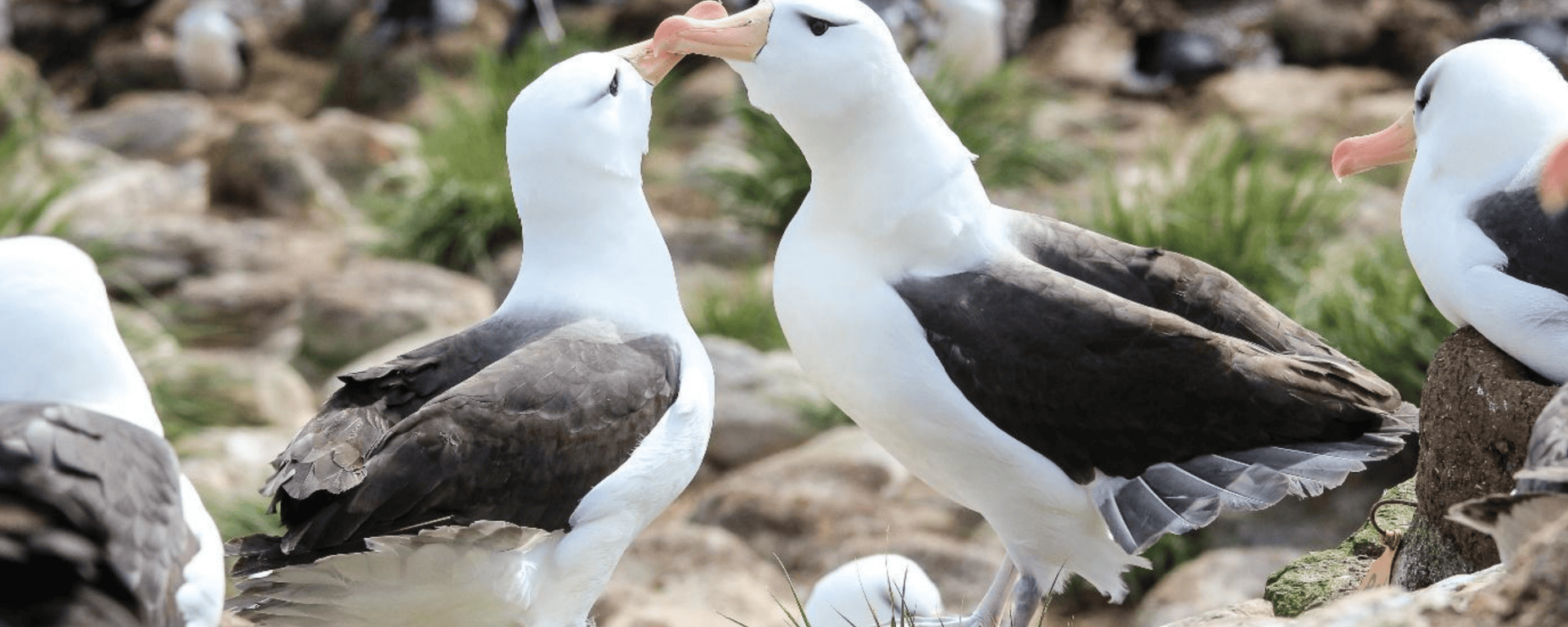
In this blog post, Natasha Gillies tells the #StoryBehindThePaper for the article “Contrasting associations between parental coordination and breeding success in albatrosses across differing environmental contexts“, recently published in the Journal of Animal Ecology. This study explored how parental effort and coordination in different environmental contexts influenced breeding success in two albatross species.
Any parent will tell you the importance of an involved partner – one who truly shares in the burden of childcare, stepping in when you need a break and making sure your tasks are divvyed up as equally as possible. For albatrosses, the sentiment is probably similar. These enormous seabirds are not just renowned for their remarkable feats of flight, but for their enduring pair bonds, which can last their lifetime. Over the course of their long partnership, the two parents work closely together to raise their single chick, pitching in equally to build the nest, incubate, and feed.
Raising a chick is the most important thing an albatross will ever do – it is the only way they can successfully pass on their genes to the next generation, and in so doing secure their evolutionary legacy. To truly understand these birds’ behaviour and ecology, then, we need to consider what’s going on at the level of the pair. Despite this, when it comes to studying their behaviour, we have tended to take a very individualistic approach.
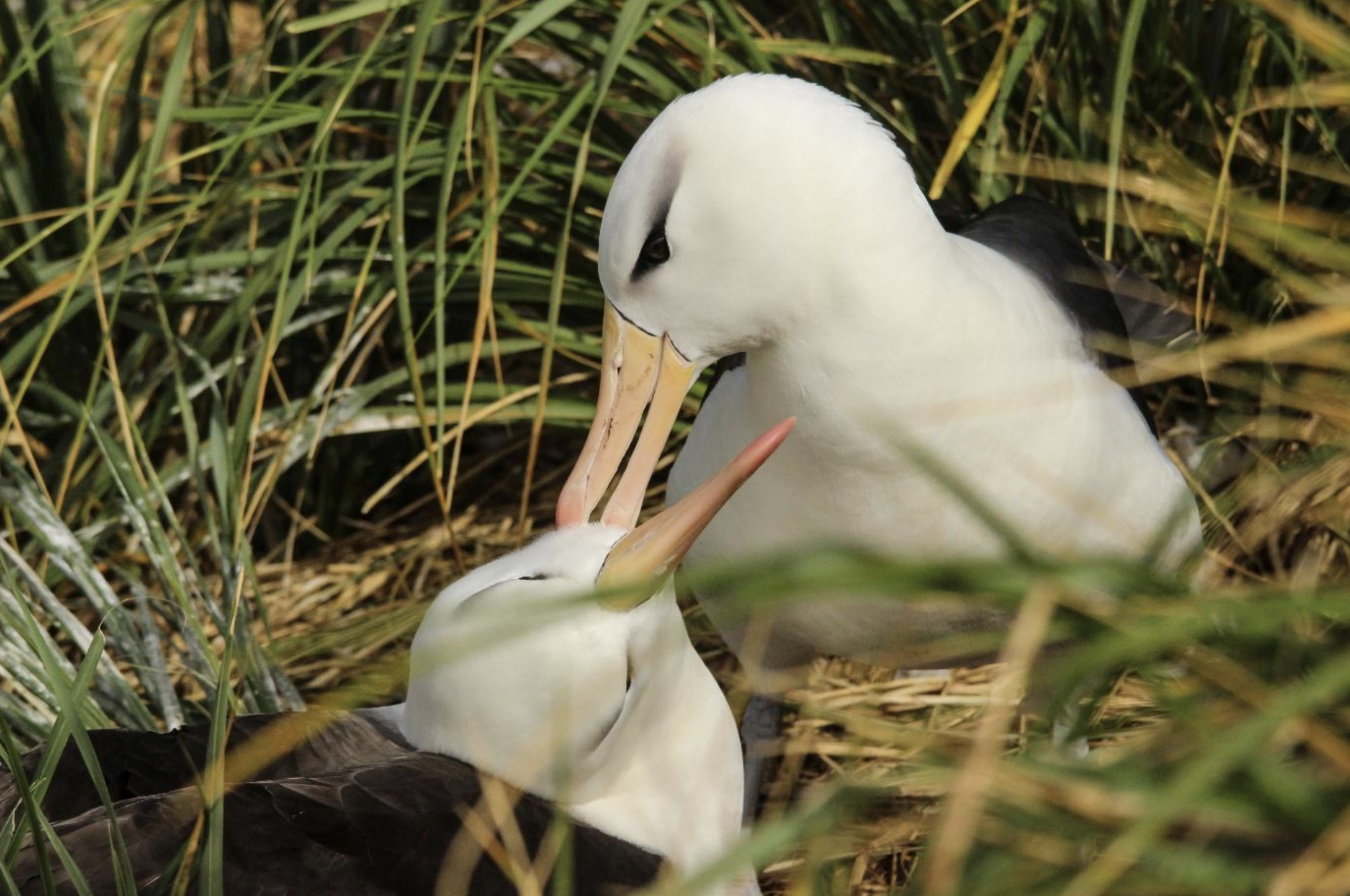
While all albatrosses care jointly with a partner, we know very little about how important it is for parents to coordinate this effort. The answer to this question is likely to depend on both species’ ecology and the environment they inhabit. Are parents breeding in unpredictable environments, where a meal is never guaranteed, more dependent on coordinating with their partner? Are long-ranging species like the wandering albatrosses, which can cover vast distances to find food with relative ease, less dependent on their partner than the smaller, shorter-ranging black-browed albatross? Using tracking data collected from populations of wandering and black-browed albatrosses breeding in very different environments, we set out to try and answer these questions.
For over twenty years, successions of field teams have been working on remote islands across the subantarctic, collecting vital data on the albatrosses inhabiting them. Their efforts have focused on two main study locales: Bird Island, off South Georgia, and the Crozet and Kerguelen archipelagos, in the south Indian Ocean. Looking at photos of albatrosses at their nest at any of these islands, and you’ll probably struggle to guess which is which. But their shared, desolate landscapes belie significant environmental differences between them. While Bird Island is subject to considerable annual variation in environmental conditions due to its exposure to large-scale climate drivers like ENSO (El Niño-Southern Oscillation) and SAM (Southern Annular Mode), both Crozet and Kerguelen enjoy relatively stable conditions.
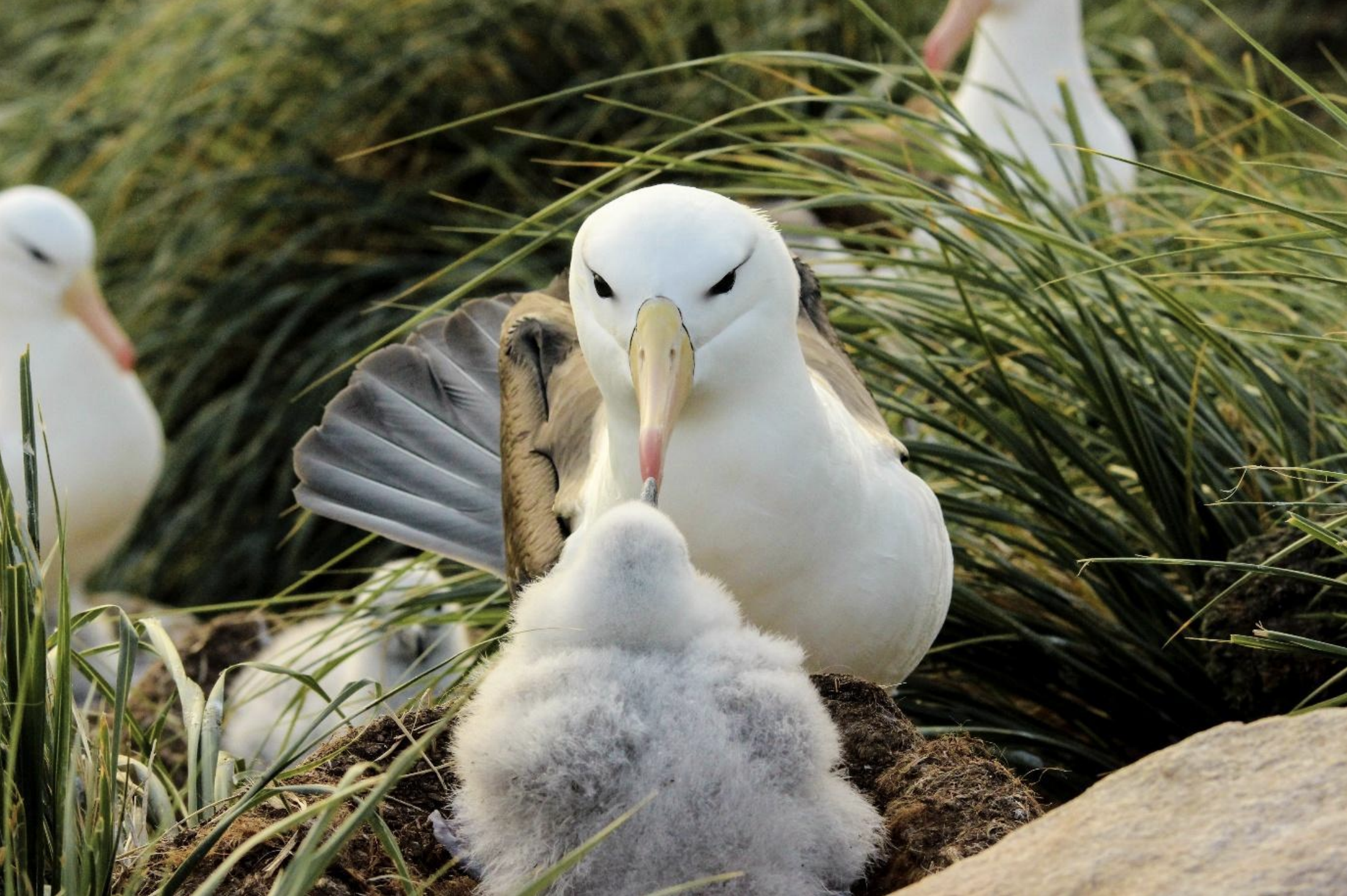
We were interested in how these differences in environmental variation affected parents’ approaches to care. To this end, we looked at how the overall investment of the two parents, their division of labour, and their relative predictability influenced the probability that their chick reached fledging age. Critically, we wanted to know whether these relationships differed between the two species, and the two environments.
Unsurprisingly, we found that the overall investment of the parents in caring increased the chance of rearing a healthy chick. But what we didn’t expect to find was this: while better coordinated parents had better rearing success in the stable environments of Kerguelen and Crozet, in the variable environment of Bird Island, coordination didn’t seem to matter.
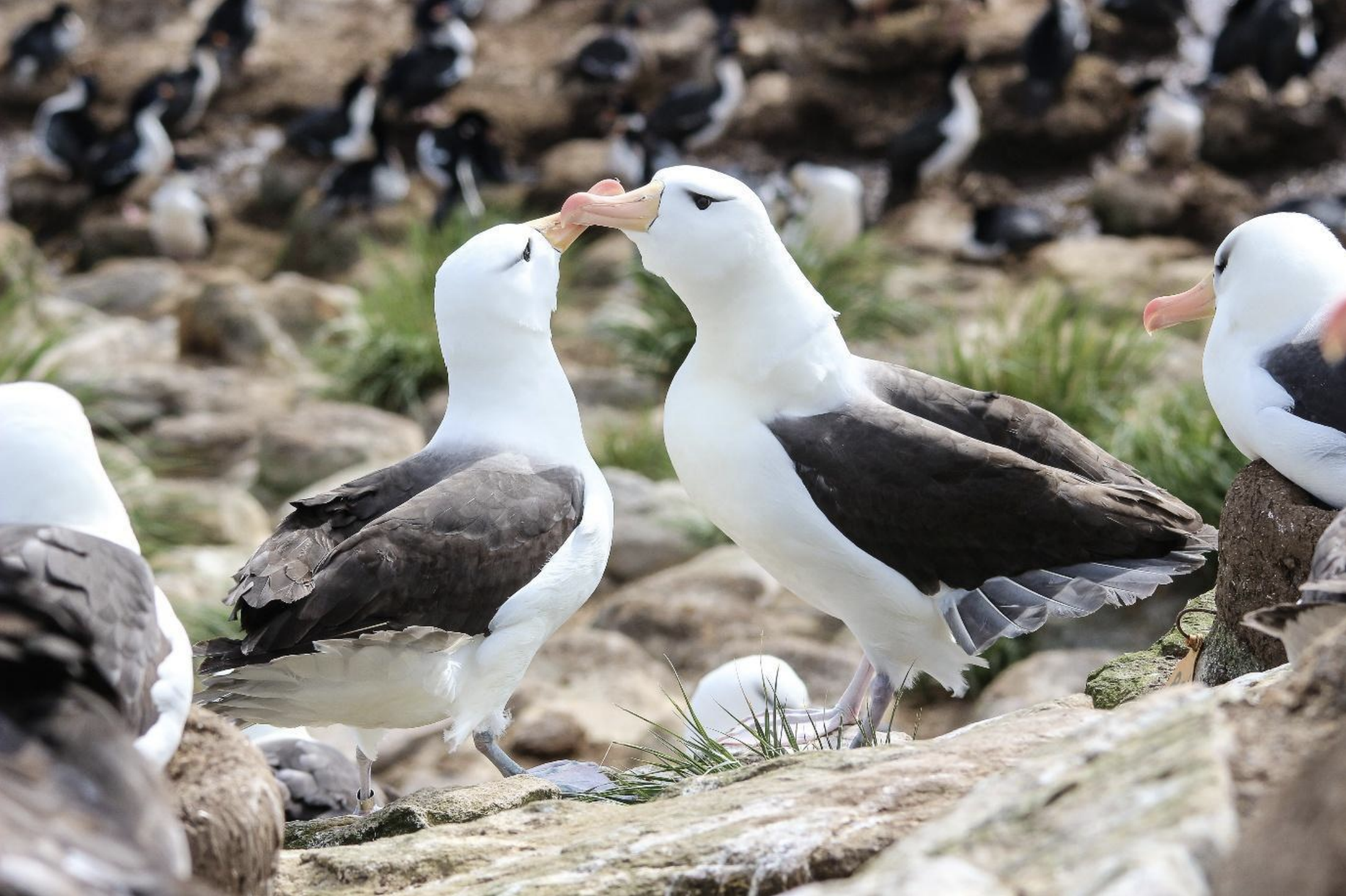
All albatrosses are long-lived and produce only a single egg per year, meaning that each breeding attempt is only a small fraction of their lifetime reproductive output. In poor conditions where food is hard to come by, this might mean that albatrosses switch to more self-serving strategies. There is no point coordinating with your partner if the consequence for you is starvation. Conversely, if conditions are very good, coordination probably doesn’t matter much anyway, if both parents find it easy to find food. For islands where the environment might be alternating between these two extremes, the overall consequence is the same: coordination has little influence on your ability to raise a chick.
Supporting this idea was our finding that these differences were much more pronounced when the chick hatched. Provisioning a hungry albatross chick is extremely energetically demanding – parents must spend long days at sea, finding enough food to feed their growing chick, while balancing this against their own hunger. An individual who is already struggling to find food is under even greater pressure to keep themselves fed at all costs – there is no point starving for the virtue of being a well-coordinated parent.
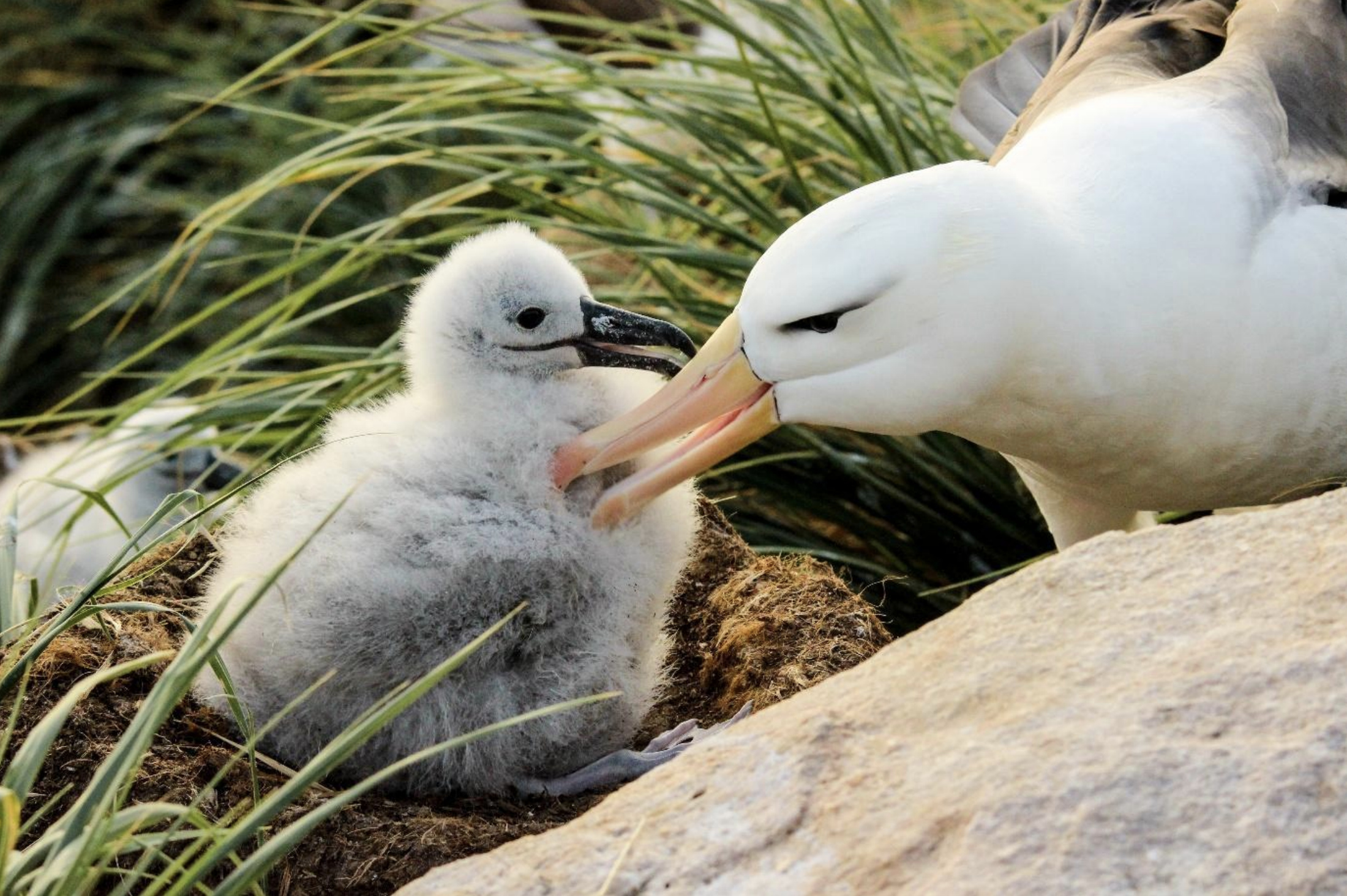
Interestingly, we found the same patterns in wandering albatrosses as for black-browed albatrosses: coordination was more important in the stable environment of Crozet, than at Bird Island. Wandering albatrosses cover vast distances on long, looping pelagic trips to sea where they exploit wind and waves to travel as efficiently as possible. They are well used to spending long stretches on the nest, and so should be naturally able to buffer environmental perturbations. Despite these expectations, we found that Crozet pairs that were poorly coordinated when feeding their chick were more likely to fail, suggesting that even for these resilient birds, large imbalances in investment between the parents might be harder to tolerate during this demanding time.
Discovering that coordination might be less important in variable environments than we thought was a surprise. And as we face a world where environments are becoming more extreme and variable, it’s more important than ever that we fully understand these complex relationships. Although coordination had no impact on breeding success at Bird Island, overall, black-browed albatrosses breeding here produce fewer chicks than they do at Kerguelen. It is possible that this – at least in part – reflects their more individualistic approach to parenthood. And if this is the case, and if increasing environmental variability leads to similar strategies at Kerguelen, this could spell disaster for these populations.
Overall, our findings illustrate an important point. Environment and ecology have significant influences on the behaviour an animal exhibits – and its consequences. When designing behavioural studies, researchers should be careful to consider animals not as individuals living in a vacuum, but in the richness of their wider social and physical environment.
Read the paper here:
https://besjournals.onlinelibrary.wiley.com/doi/full/10.1111/1365-2656.70350

